
Bin Induction: Accelerating Accuracy in Order Processing
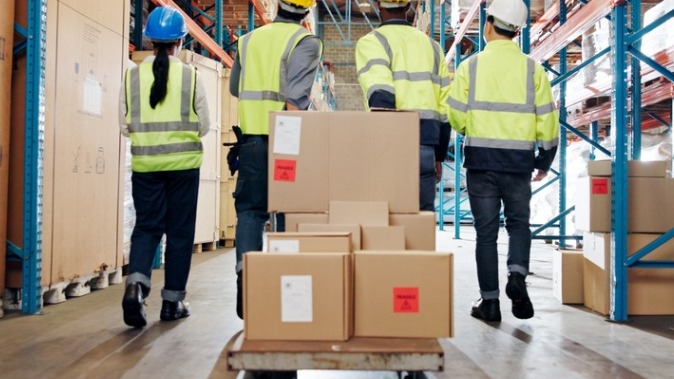
Bin Induction
Definition
Bin induction is the process of registering and placing incoming or relocated inventory into designated storage locations (bins) in a warehouse and updating the warehouse management system to reflect their exact positions. It typically involves physical putaway, barcode or RFID scanning, and system verification to ensure accurate inventory tracking and efficient subsequent picking and fulfillment.
Overview
What bin induction is
Bin induction is a practical method warehouses use to organize and assign picks so that order processing becomes faster and more accurate. Instead of each picker traveling individually to randomly scattered locations for each order, bin induction groups items into logical pick bins, zones, or micro-locations and assigns those groups to pickers or automated devices. The result is fewer trips, less handling, and reduced opportunity for errors.
Why warehouses use bin induction
At a basic level, the technique helps warehouses solve two common problems: excessive travel time and incorrect picks. Travel time often dominates the labor cost of picking; by consolidating commonly ordered SKUs into specific bins or by directing pickers to gather all items for multiple orders in a single sweep, bin induction reduces walking and motion. Accuracy improves because the system guides pickers to pre-defined bins and can include checks (barcodes, scans, confirmations) that reduce mispicks.
How bin induction works (step by step)
- Data analysis: The process begins by analyzing order history and SKU relationships (which items are often bought together, order frequency, and velocity).
- Bin design: Based on the analysis, the warehouse defines pick bins, clusters, or zones—these may be physical containers, shelf groupings, or logical assignments within a WMS (warehouse management system).
- Pick assignment: The WMS or order management system assigns picks to bins or groups picks so a single picker can collect items for multiple orders in one pass.
- Execution with validation: Pickers follow guided instructions (paper, voice, RF scanner, or mobile device) to the target bin and confirm each pick via scanning or other validation methods.
- Consolidation and packing: After picking, items are consolidated for packing and shipping; the reduced variety of pick locations simplifies check and pack steps.
Common bin induction strategies
- Cluster picking: Grouping several orders and picking common SKUs together, placing them into order-specific bins.
- Zone induction: Assigning specific warehouse zones to pickers and directing picks by zone to limit travel distance.
- Dedicated bin assignments: High-velocity SKUs receive dedicated pick bins that are always replenished to the front, reducing search time.
- Wave and batch induction: Scheduling picking waves and batching orders by similarity, then assigning batches to bins for efficient collection.
Technology that enables bin induction
Modern WMS and order management platforms are central to bin induction. They use order data, slotting rules, and algorithms to decide which SKUs belong in which bins and which orders should be batched. Complementary technologies include barcode/RFID scanning for validation, voice picking, pick-to-light systems, and analytics tools that monitor performance and suggest re-slotting.
Benefits (beginner-friendly summary)
- Faster fulfillment: Less travel and more efficient pick paths reduce order cycle time.
- Higher accuracy: System-guided picks and validation lower mis-picks and returns.
- Lower labor cost: Improved productivity per picker means fewer labor hours per order.
- Scalability: As order volume grows, induction strategies maintain efficiency without a linear increase in labor.
Practical example
Imagine an e-commerce warehouse where many customers buy phone cases and chargers together. By analyzing order data, the warehouse creates a bin that always holds cases and chargers near the packing area. When several orders come in, the system batches them and directs a picker to that single bin, allowing the picker to pull all required quantities for multiple orders at once, then move to the next bin. This reduces walking and speeds packing.
Implementation best practices
- Start with data: Use historical order data to find natural groupings of SKUs and identify your fastest-moving items.
- Test in small pilots: Trial bin induction in a single zone or product family, measure improvements, then scale.
- Integrate with WMS: Choose induction rules that your WMS can enforce and report on, including scan validation and exception handling.
- Align slotting and replenishment: Keep dedicated bins replenished and positioned to minimize travel to restock high-demand locations.
- Train staff: Clear instructions and feedback loops help pickers adopt new flows and reduce confusion during changeover.
Common mistakes to avoid
- Poor data quality: Induction based on incomplete or old order data will create inefficient bins.
- Overcomplicating bin rules: Too many special-case bins increase handling complexity and negate benefits.
- Ignoring replenishment: If bins are not consistently replenished, pickers will spend time searching or moving to secondary locations.
- Neglecting continuous review: SKU relationships change; induction rules should be reviewed regularly.
Key performance indicators (KPIs) to track
- Pick rate (lines or units per hour)
- Order cycle time (order received to ship)
- Pick accuracy (percentage of orders without pick errors)
- Travel distance or time per pick
- Labor cost per order
When bin induction is most useful
Bin induction pays off in operations with high SKU correlation between orders, variable order profiles (many small orders), and measurable pick-walk costs. It’s especially valuable for e-commerce, third-party logistics (3PL), and distribution centers with rapid order turnover.
Final takeaway
Bin induction is a straightforward, data-driven approach to reorganizing how picks are collected so warehouses can be faster, more accurate, and less costly. With good data, a capable WMS, and simple pilot tests, most warehouses can realize measurable improvements in order processing without major capital investment.
Sources And Additional Reading (3)
- Robotic Sorter Induction
“Robotic Sorter Induction.” Honeywell, https://automation.honeywell.com/us/en/products/warehouse-automation/solutions-by-technology/robotics/robotic-sorter-induction.
- Sortation & Conveyor Systems
“Sortation & Conveyor Systems.” Honeywell, https://automation.honeywell.com/us/en/products/warehouse-automation/solutions-by-function/sortation-conveyor-systems.
- How AutoStore Works - Everything You Need to Know
“How AutoStore Works - Everything You Need to Know.” Kardex, https://www.kardex.com/en-us/blog/how-autostore-works.
More from this term
Looking for a 3PL?
Compare warehouses on Racklify and find the right logistics partner for your business.