
Bonded Warehouse vs. Foreign‑Trade Zone: Comparing Duty Deferral Options
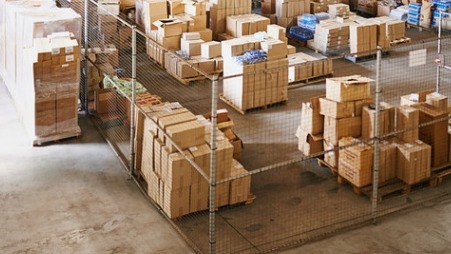
bonded warehouse
Definition
A bonded warehouse is a secured facility authorized by customs where imported goods can be stored without payment of duties until they are released for domestic consumption or exported. Businesses use bonded warehouses to defer duty payments, consolidate shipments, and complete customs formalities.
Overview
Bonded Warehouse A warehouse authorized for storing imported goods before duties or taxes are paid. Importers and logistics planners often evaluate bonded warehouses against Foreign‑Trade Zones (FTZs) when deciding how to defer duties, manage inventory, and optimize cross-border flows.
Both bonded warehouses and FTZs provide customs-supervised environments that delay or eliminate duty payment, but they differ in structure, regulatory treatment, permitted activities, and cost. Choosing between them depends on business needs: the volume and frequency of imports, desired processing or manufacturing activities, expected length of storage, and capital versus operating cost tradeoffs.
Core Differences
Bonded warehouses are customs-licensed storage facilities where goods remain under CBP control until duty payment or re-export. They can be public (serving multiple clients) or private (single-client). Foreign‑Trade Zones are designated sites — often entire industrial parks — with special customs status allowing goods to be admitted without formal customs entry; duties are paid only if and when goods leave the zone into U.S. commerce.
- Legal Status: Bonded warehouses are specific licensed facilities; FTZs are designated geographic zones with different admission/entry rules.
- Processing Permissions: FTZs commonly permit manufacturing, assembly, and substantial processing with potential inverted tariff benefits; bonded warehouses typically limit handling to storage and light, non‑destructive operations unless specifically authorized.
- Administration: FTZ use requires coordination with a grantee and filing under FTZ procedures; bonded warehouses generally require a customs bond and standard warehouse receipts.
When A Bonded Warehouse Is Preferable
Bonded warehouses make sense for importers with intermittent or lower-volume shipments who need short-to-medium term storage and occasional value-added services like inspection or repackaging. Public bonded warehouses offer flexibility for companies unwilling to invest in a private facility or long-term FTZ arrangements. They are also useful when importers simply need time to resolve tariff classification or testing without immediately entering goods for consumption.
- Low Volume or Sporadic Imports: Avoids FTZ application and administration complexity.
- Temporary Holds: Useful for staging goods pending distribution decisions or sale dates.
- Re-export Strategies: Expedites sending goods back out without paying duties.
When An FTZ Is The Better Choice
FTZs are designed for higher-volume, continuous manufacturing or distribution operations where duty savings or production efficiencies justify the administrative overhead. If a company plans to perform assembly, blending, or manufacturing that changes tariff classification (and potentially reduces duty rates), an FTZ can create significant duty savings and operating flexibility over time.
- Manufacturing And Processing: FTZs permit substantial operations that bonded warehouses typically do not.
- Inverted Tariff Opportunities: Pay the duty rate applicable to the finished product rather than higher input rates in certain industries.
- Long‑Term Cost Savings: For continuous, high-volume imports the administrative costs of FTZ setup are often offset by duty and operational savings.
Cost And Administrative Tradeoffs
Bonded warehouses generally have lower upfront administrative costs: an importer or 3PL secures a customs bond and pays storage fees. FTZs require an application to the Foreign-Trade Zones Board, a grantee relationship, and ongoing compliance reporting. However, FTZs may provide recurring duty savings that exceed these costs for the right business profile.
- Upfront Costs: Bonded warehouses—lower; FTZs—higher (application, activation, compliance systems).
- Operational Complexity: FTZs require zone accounting, inventory control, and specialized reporting; bonded warehouses require strict incoming/outgoing records tied to customs entries.
- Flexibility: Bonded warehouses offer immediate access and simpler use for ad hoc needs; FTZs are strategic and best for sustained programs.
Decision Guide — Practical Questions To Ask
When evaluating options, ask practical operational and financial questions: How frequently do you import? Do you plan to perform manufacturing or assembly? What is the average dwell time for your goods? Are you pursuing duty-savings through tariff reclassification? Is the administrative burden of an FTZ justified by projected savings?
- Volume And Frequency: High-volume, ongoing imports point to FTZ; occasional shipments lean toward bonded warehouses.
- Processing Needs: If you need assembly or transformation, FTZ often wins.
- Time Horizon: FTZs require a longer commitment to realize savings; bonded warehouses are better for short-term or variable needs.
In short, the Bonded Warehouse is a lower‑commitment, customs‑supervised storage option that defers duties and suits short-term holding, whereas a Foreign‑Trade Zone represents a strategic, zone-level program optimized for ongoing manufacturing and large-scale duty management. Choose by aligning projected volumes, permitted activities, and the timeline for realizing duty savings.
Sources And Additional Reading (4)
- U.S. Customs and Border Protection
“U.S. Customs and Border Protection.” U.S. Customs and Border Protection, https://www.cbp.gov/.
- Importing into the United States: A Guide for Commercial Importers
“Importing into the United States: A Guide for Commercial Importers.” U.S. Customs and Border Protection, https://www.cbp.gov/trade/basic-import-export/importing-commercial-goods.
- Foreign Trade
“Foreign Trade.” U.S. Census Bureau, https://www.census.gov/foreign-trade/.
- World Customs Organization
“World Customs Organization.” World Customs Organization, http://www.wcoomd.org/.
More from this term
Looking for a 3PL?
Compare warehouses on Racklify and find the right logistics partner for your business.