
Bonded Warehouse
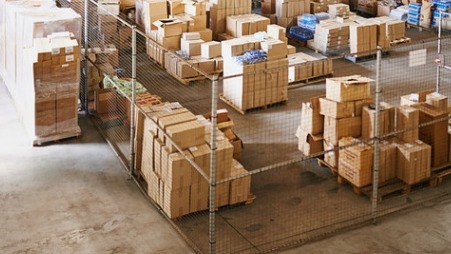
bonded warehouse
Definition
A bonded warehouse is a secured facility authorized by customs where imported goods can be stored without payment of duties until they are released for domestic consumption or exported. Businesses use bonded warehouses to defer duty payments, consolidate shipments, and complete customs formalities.
Overview
Bonded warehouse refers to a customs-approved storage facility in which imported goods may be held without immediate payment of import duties and taxes. These warehouses are monitored by customs authorities and operate under a formal bond that guarantees the payment of duties, taxes, and any other charges should those goods be released for consumption in the domestic market. For businesses and traders, bonded warehousing is a fundamental tool for cashflow management, inventory planning, and international trade compliance.
How it works
The basic mechanism is straightforward: when goods arrive in a country, an importer can elect to place them directly into a bonded warehouse rather than clearing them immediately through customs. While the goods remain in the bonded facility, duties and taxes are suspended. The importer can later choose to:
- withdraw the goods for domestic consumption and pay the applicable duties and taxes;
- re-export the goods to another country without ever paying the local duties (subject to export rules); or
- use the goods in certain authorized manufacturing or processing activities under customs supervision, depending on the warehouse classification and local regulations.
Who uses bonded warehouses and why
Bonded warehouses are used by a range of participants in international trade: importers, exporters, freight forwarders, distributors, and logistics providers. The main strategic benefits include:
- Cash-flow management: Deferring duty payments preserves working capital until goods are sold, re-exported, or otherwise cleared.
- Inventory flexibility: Goods can be consolidated, sorted, repacked, or stored pending market demand without incurring immediate duty costs.
- Export facilitation: Goods destined for re-export can move through the country without local duties, simplifying transshipment and processing for international supply chains.
- Compliance and auditability: Customs oversight and bonded accounting create traceable records that help meet regulatory requirements.
Types of bonded arrangements (general)
Terminology and permitted activities vary by jurisdiction. Common distinctions include:
- Public bonded warehouses: Operated by third-party warehouse providers and available to multiple importers. Customers pay storage and handling fees but benefit from flexible access to bonded facilities.
- Private bonded warehouses: Operated by a single company for its own goods. Privately bonded status often requires stricter controls and a reliable compliance history.
- Special-purpose bonded facilities: Some bonded sites are authorized for limited activities such as repacking, labelling, cleaning, or manufacturing for export under customs supervision.
Customs control and obligations
Because bonded warehouses hold goods under suspension of duty, customs authorities maintain strict oversight. Typical obligations include accurate recordkeeping, periodic reporting, physical security, and allowing customs inspections. The warehouse operator or the bonded party must provide a financial guarantee (a bond) to cover potential duties, taxes, and penalties. Failure to comply with customs rules can result in seizure of goods, fines, or loss of bonded privileges.
Permitted operations and processing
Not all operations are allowed in all bonded warehouses. Commonly permitted activities include storage, sorting, packing, and protected repacking. Some jurisdictions permit limited manufacture or assembly provided the resulting goods are exported and duties are managed according to the applicable programs. Any processing beyond simple handling typically requires explicit customs authorization and specific warehouse classification.
Practical examples
Examples help illustrate typical use cases:
- An importer stores seasonal inventory in a bonded warehouse to delay duty payments until sales occur, improving cash flow over the high-stock period.
- A distributor consolidates small shipments from different origins in a bonded facility, repacks and relabels them for the destination market, and then clears duties only on the portion moved into domestic distribution.
- An international apparel company imports fabric into a bonded warehouse, manufactures garments there under authorised conditions, and then exports the finished garments to other countries without local duties being applied.
Advantages
Key benefits of using bonded warehouses include reduced immediate tax burden, flexibility in supply chain timing, simplified transshipment, and the possibility to add value (through repacking or labeling) under customs control. For multi-national operations, bonded facilities can reduce the need for immediate customs clearance in intermediate ports, enabling more agile inventory management.
Limitations and risks
Bonded warehousing comes with responsibilities and potential downsides. Administrative and compliance costs (bond fees, recordkeeping, inspections) add complexity. Incorrect or incomplete documentation can lead to penalties. Additionally, bonded storage may not be appropriate if long-term storage is required and warehouse fees make the arrangement uneconomic. Businesses must also be aware of jurisdictional constraints: allowed activities and time limits for goods in bonded storage vary between countries and even between different types of bonded facilities within a country.
Best practices
- Maintain clear and accurate inventory records and ensure your warehouse operator follows customs-approved procedures.
- Understand the specific obligations and permitted operations under the relevant customs classification before placing goods into bonded storage.
- Use bonded warehousing strategically to optimize cash flow and inventory agility, not as a substitute for poor forecasting or inventory management.
- Work with experienced customs brokers or logistics partners to manage declarations, bonds, and compliance audits.
Common mistakes
- Assuming all types of processing are allowed — some activities require special authorization.
- Poor documentation that leads to difficulty proving the status and movement of goods to customs.
- Overlooking time limits or storage fees that can erode projected savings from duty deferral.
- Relying on a bonded facility without verifying its customs authorization or compliance record.
In summary, a bonded warehouse is a powerful customs regime that, when used correctly, reduces upfront duty costs, adds flexibility to international logistics, and supports trade strategies such as re-export and value-added processing under customs supervision. Success depends on understanding the legal framework, choosing the appropriate type of bonded facility, and maintaining disciplined compliance and recordkeeping practices.
Sources And Additional Reading (3)
- What Is a Customs Bonded Warehouse?
“What Is a Customs Bonded Warehouse?” U.S. Customs and Border Protection, https://www.help.cbp.gov/s/article/Article1853?language=en_US.
- Customs Bonded Warehouses
“Customs Bonded Warehouses.” International Trade Administration, https://beta.trade.gov/article?id=Customs-Bonded-Warehouses.
- Customs Services
“Customs Services.” DHL Express, https://www.dhl.com/us-en/home/express/products-and-solutions/products-and-services-overview/customs-services.html.
More from this term
Looking for a 3PL?
Compare warehouses on Racklify and find the right logistics partner for your business.