
How Bin Induction Streamlines Modern Fulfillment Centers
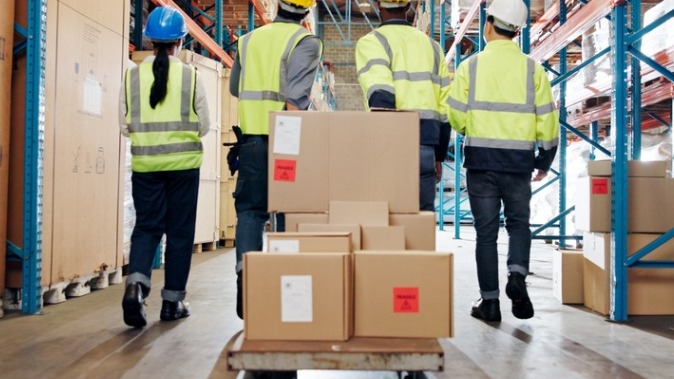
Bin Induction
Definition
Bin induction is the process of registering and placing incoming or relocated inventory into designated storage locations (bins) in a warehouse and updating the warehouse management system to reflect their exact positions. It typically involves physical putaway, barcode or RFID scanning, and system verification to ensure accurate inventory tracking and efficient subsequent picking and fulfillment.
Overview
What is bin induction?
Bin induction is the automated process of introducing storage bins, totes, or trays into a fulfillment center’s handling system so their contents can be identified, sorted, routed, and processed with minimal manual handling. Instead of workers manually placing each bin on a conveyor or scanning items individually, induction stations accept pre-packed bins and use scanners, sensors, and controls to register the bin and its contents in the warehouse management system (WMS).
How it works — a simple path
At a basic level, bin induction follows a clear sequence: a worker or a goods-to-person system places a bin onto an induction conveyor or chute; a barcode or RFID reader scans the bin ID and associated order or inventory data; sensors check orientation and detect misloads; the WMS validates the bin contents and issues downstream instructions; sortation equipment sends the bin toward picking, packing, replenishment, or staging areas. Automated gates, diverters, and accumulation zones smooth flow and maintain throughput.
Key components
- Induction conveyor or slat/roller feed where bins enter the system.
- Barcode/RFID readers to capture bin and contents IDs.
- Sensors and cameras for orientation and quality checks.
- Controls and PLCs that interface with the WMS/TMS.
- Sortation devices (diverters, pop-up wheels, tilt trays) that route bins.
- Accumulation and buffering zones to prevent congestion.
Why bin induction matters for modern fulfillment centers
Fulfillment centers face pressure to increase throughput, reduce errors, and handle ever-more fragmented order profiles (many small orders, high SKU counts). Bin induction addresses these needs by:
- Increasing throughput: Automated induction moves bins into the system faster and more consistently than manual placement, enabling higher sort rates per hour.
- Reducing errors: Scanning bin IDs at induction ties physical items to digital orders early in the flow, cutting mispicks and misroutes.
- Improving space utilization: Induction enables compact buffering and sortation strategies, reducing the need for large staging areas.
- Simplifying labor: Workers focus on higher-value tasks (packing, quality control) rather than repetitive conveyor loading.
- Enhancing traceability: Early capture of bin and item data supports audit trails and real-time visibility in the WMS.
Types and approaches
Bin induction systems vary by automation level and layout. Common approaches include:
- Manual-assisted induction: Operators place bins onto an induction conveyor; the system handles scanning and routing. Low capital cost and flexible for varied SKUs.
- Semi-automated induction: Mechanical feeders or tilt trays position bins automatically while humans supervise loading. Good balance of speed and complexity.
- Fully automated induction: Robotic arms, automated guided vehicles (AGVs), or automated storage/retrieval systems (AS/RS) place bins directly into induction points for end-to-end automation.
- Goods-to-person integration: Bin induction can be paired with goods-to-person pick modules: replenished bins are inducted and routed to pick stations when required.
Best practices for implementation
- Start with data: Analyze order profiles, peak volumes, bin sizes, and SKU dimensions to size induction and sortation equipment appropriately.
- Standardize bins and labeling: Use uniform bin sizes and consistent barcode/RFID placement to reduce jams and scanning errors.
- Integrate tightly with WMS: Real-time communication between induction controls and the WMS is critical for accurate routing and inventory updates.
- Plan buffering intelligently: Provide accumulation lanes and surge capacity to protect upstream processes from downstream slowdowns.
- Design for maintainability: Ensure easy access to sensors, readers, and rollers for cleaning and repairs to minimize downtime.
- Train staff: Operators should understand troubleshooting, correct bin placement, and how to respond to fault lights or jams.
Common mistakes to avoid
- Underestimating variability: Installing a narrowly specified induction system that cannot handle different bin types or skewed order mixes will cause bottlenecks.
- Poor labeling practices: Misplaced, damaged, or low-contrast barcodes lead to failed reads and manual interventions.
- Neglecting integration testing: Deploying without end-to-end WMS and PLC integration results in routing errors and reconciliation problems.
- Ignoring ergonomics: Expecting operators to habitually place heavy or awkward bins without appropriate aids increases injury risk and reduces throughput.
Metrics and ROI
Measure bin induction success by tracking:
- Throughput (bins/hour or orders/hour)
- Pick-to-ship cycle time
- Read rates at induction (percent successfully scanned)
- Error rates (misroutes, mispicks) tied to induction events
- Labor hours per order
Typical ROI drivers are increased throughput enabling more orders with the same labor, reduced error-related costs (returns, rework), and smaller footprint requirements. Payback periods depend on volume and automation level but are often realized through improved labor productivity and error reduction.
Real-world example (friendly scenario)
Imagine a mid-sized e-commerce fulfillment center that previously had staff lifting totes onto a conveyor and manually scanning each label. During peak season the line backed up, misreads were common, and workers were exhausted. After implementing a semi-automated induction station — standardized totes, a guided loading lane, and an inline scanner tied to the WMS — bins flowed smoothly, read accuracy rose above 99%, and throughput increased by 35%. Workers were redeployed to quality checks and packing, improving overall service levels.
When bin induction might not be right
Very small operations with low volumes and high SKU variability may find the capital and complexity of induction systems unnecessary. Similarly, fulfillment centers that operate almost entirely with single-item, walk-pick workflows may prefer simpler put-walls or pick-to-light systems. The key is matching induction investment to scale and process design.
Final notes
Bin induction is a foundational automation technique for modern fulfillment centers that need to scale speed and accuracy while controlling labor and space costs. For beginners, think of induction as the system’s front door: it’s where physical items meet the digital brain (WMS). Good induction design reduces the friction between those two worlds and makes downstream sorting, picking, and packing faster and more reliable.
Sources And Additional Reading (3)
- Warehouse Automation
“Warehouse Automation.” Dematic, https://www.dematic.com/en-us/products/.
- Sortation Systems
“Sortation Systems.” Honeywell, https://automation.honeywell.com/us/en/products/warehouse-automation/solutions-by-function/sortation.
- Warehousing Solutions
“Warehousing Solutions.” Vanderlande, https://www.vanderlande.com/warehousing/.
More from this term
Looking for a 3PL?
Compare warehouses on Racklify and find the right logistics partner for your business.