
Intermodal Containment: Rigid ISO Tanks vs. Single-Use Flexitanks
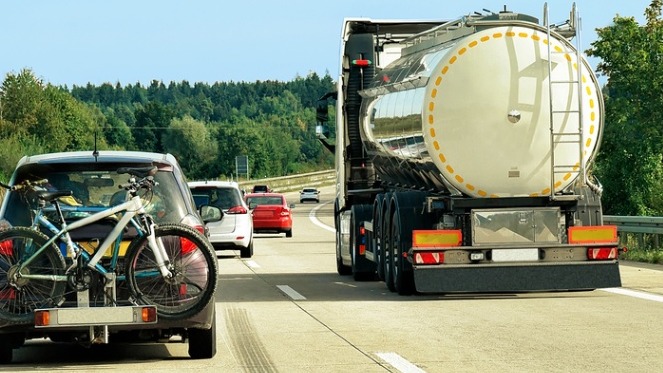
Bulk Liquid Shipping
Definition
Bulk liquid shipping is the movement of large volumes of liquids—such as crude oil, chemicals, edible oils, and liquefied gases—using specialized carriers like tankers, barges, or ISO tanks. It requires dedicated containment systems, loading and unloading equipment, and strict safety and regulatory controls to prevent spills, contamination, and hazards during transport.
Overview
Intermodal containment for bulk liquids typically relies on two dominant solutions: rigid ISO tank containers and single-use flexitanks. Each approach transforms standard intermodal equipment—ocean vessels, rail wagons, and road chassis—into a bulk liquid logistics solution, but they differ sharply in construction, regulatory scope, lifecycle economics, operational overhead, and appropriate cargo types. Understanding these differences is essential for shippers, carriers, and logistics planners who must match safety, cost, and service objectives to the cargo’s physical and regulatory profile.
Design and construction
- ISO tank containers: Constructed as a pressure-capable cylindrical vessel of high-grade stainless steel, mounted within a standardized 20-foot protective steel frame. Typical working capacities are approximately 20,000–26,000 liters, depending on design. Tanks are fitted with robust valves, fittings, manways, and often safety devices such as pressure-relief systems. They are designed for multimodal use and built to meet international safety and inspection regimes.
- Flexitanks: Comprised of multi-layer polyethylene film laminated to woven polypropylene or similar outer layers; they are supplied as a collapsed bladder that is unrolled into a standard 20-foot dry container and inflated as liquid is pumped into it. Typical capacities vary roughly between 16,000 and 24,000 liters. After discharge, most flexitanks are cut up and recycled at destination.
Regulatory and cargo compatibility
- ISO tanks are engineered and certified for a wide range of cargoes, including many hazardous liquids that require secondary containment, double-valved connections, and pressure rating. They must comply with applicable international and national regulations governing the transport of dangerous goods by sea, road, and rail, and are subject to regular inspection and testing.
- Flexitanks are typically limited to non-hazardous, non-corrosive liquids—examples include wines, fruit juices, edible oils, certain base lubricants, and many non-hazardous chemical products. Because of their soft-sided construction and lack of secondary containment equivalent to a rigid tank, regulations generally prohibit their use for hazardous or highly toxic liquids.
Operational considerations and lifecycle economics
- Reuse vs single-use: ISO tanks are reusable assets with long service lives. That reusability delivers per-shipment cost advantages over many voyages but introduces logistics overhead for empty repositioning, cleaning, inspection, and maintenance.
- Flexitanks are single-use assets: once unloaded they are typically cut out of the container and either recycled or disposed of. This eliminates return logistics and interior cleaning but transfers costs to consumables and waste management at destination.
- Handling and terminal operations: ISO tanks are handled like containers but require certified lifting points and trained handlers for safe transfer. They may also need inspection and cleaning facilities at terminals. Flexitanks use standard dry-box handling and reduce terminal dwell associated with specialized tank handling, but loading and unloading require compatible pumps, hoses, and careful weight distribution inside the container.
Performance and service suitability
- Cargo protection and contamination risk: ISO tanks, made of stainless steel and designed for cleaning, offer the highest protection against contamination and are preferred for cargoes with strict sanitary or purity requirements. Flexitanks are suitable for many food-grade and industrial liquids when proper liner materials and supply-chain sanitary practices are observed, but they increase single-use contact surfaces and therefore require strict sourcing and testing protocols.
- Temperature control and additives: ISO tanks can be fitted with thermal jackets, insulation, or heating systems for temperature-sensitive products. Flexitanks offer little inherent thermal control and are generally suitable for ambient-stable liquids.
- Capacity and payload: Flexitanks can sometimes yield higher net payload per 20-foot container footprint because they utilize the dry container interior without the deadweight of a heavy steel tank, but actual payload depends on product density, container tare, and route weight limits.
Risk management and compliance
- ISO tanks require scheduled inspections, pressure testing, and certification renewals. They also require documented cleaning and compatibility records between cargoes, and maintenance for valves and gaskets to prevent leaks and contamination.
- Flexitank use relies heavily on correct installation, certified materials for the liquid in question, and strict pre-shipment testing (e.g., leak tests and compatibility checks). Because the liner is single-use, traceability of materials and supplier certifications is important for food-grade shipments.
Environmental and sustainability considerations
- Reusability of ISO tanks reduces per-shipment material waste, but the energy, cleaning chemicals, and repositioning transport create other environmental costs. Optimizing tank rotations and using efficient cleaning practices can improve overall sustainability.
- Flexitanks generate single-use material that can be recycled if proper programs exist at destination. For short-rotation, one-way trade lanes where tank repositioning would be costly and time-consuming, flexitanks can lower carbon and logistical footprints—provided end-of-life recycling is available.
Operational selection matrix (practical decision factors)
- Cargo hazard and regulatory status: If cargo is hazardous, toxic, or corrosive—choose ISO tanks. Flexitanks are only for non-hazardous liquids.
- Sanitary/purity requirements: High-purity or food-grade product with frequent changeovers generally favors ISO tanks; flexitanks can be acceptable when certified liners and testing regimes are used.
- Frequency and route economics: For regular, high-volume, repeat trades where asset rotation is manageable, ISO tanks typically yield lower lifetime cost per litre. For one-way trades or routes with expensive tank repositioning, flexitanks often offer lower total landed cost.
- Terminal infrastructure and handling: If terminals lack tank handling infrastructure or the shipper prefers simplified operations, flexitanks simplify handling; if specialized loading/unloading or temperature control is needed, ISO tanks provide more options.
- Environmental policy: Consider local recycling capability for flexitanks and cleaning/energy impacts for ISO tank operations when assessing sustainability targets.
Examples of use
- Wine and fruit juice exporters on one-way shipments often choose flexitanks to avoid empty container repositioning and to capture higher payload per container.
- Chemical producers transporting acids, solvents, or regulated industrial chemicals use ISO tanks for regulatory compliance, safety, and the ability to return and re-use certified assets across multiple legs.
- Base oil or lubricant shipments may use either option depending on hazard classification, contract length, and destination recycling capability.
Best practices
- Establish cargo compatibility matrices and cleaning protocols when using ISO tanks; maintain service records and timely inspections.
- For flexitanks, specify certified liners, require pre-shipment testing, and ensure destination recycling or waste handling is in place.
- Include contingency planning for spills, emergency response, and insurance coverage tailored to chosen containment.
Choosing between rigid ISO tanks and single-use flexitanks requires balancing regulatory compliance, total landed cost, operational complexity, and environmental goals. For hazardous or highly controlled liquids, ISO tanks are the default. For many non-hazardous bulk liquids, flexitanks deliver a flexible, often lower-cost solution when the trade lane and destination infrastructure support responsible end-of-life management.
Sources And Additional Reading (3)
- Warehouse Management
“Warehouse Management.” Mecalux, https://www.mecalux.com/warehouse-manual.
- Guide to Ecommerce Fulfillment for 3PLs
“Guide to Ecommerce Fulfillment for 3PLs.” Extensiv, https://www.extensiv.com/blog/guide-to-ecommerce-fulfillment-for-3pls.
- Industry Guidance For Recalls
“Industry Guidance For Recalls.” U.S. FDA, https://www.fda.gov/safety/recalls-market-withdrawals-safety-alerts/industry-guidance-recalls.
More from this term
Looking for a 3PL?
Compare warehouses on Racklify and find the right logistics partner for your business.