
Last-Mile Optimization and Urban Density
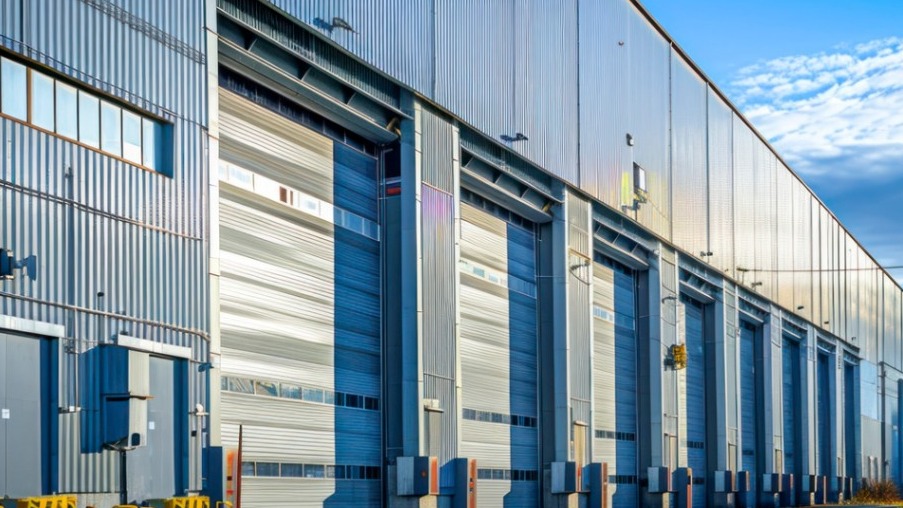
Shadow Warehouse
Definition
A Shadow Warehouse is a short-term, pop-up storage and fulfillment location activated to handle sudden increases in demand. It provides additional capacity near core operations to prevent delays and maintain service levels, typically on temporary contracts with limited services and staffing.
Overview
Overview
This entry explains the role of a shadow warehouse in last-mile optimization, with emphasis on how urban density, micro-fulfillment technology, and local operations combine to make 1-hour or same-day delivery feasible. A shadow warehouse is a distributed, small-footprint storage and picking location—distinct from a regional distribution center—that deliberately positions inventory near end customers to minimize transit time, reduce fuel consumption, and increase delivery reliability in dense urban zones.
How shadow warehouses function
Shadow warehouses act as the last node in a multi-tier fulfillment network. Core inventory and slower-moving SKUs remain in regional distribution centers or bulk warehouses, while high-frequency SKUs, promotional items, and time-sensitive goods are held in one or more shadow sites inside urban zones. Orders are routed dynamically: if an order’s destination lies within a shadow site’s service area and the SKU is stocked there, the order is fulfilled from that site for immediate or very fast delivery.
Key elements of operation
- Location planning: Sites are chosen based on customer density, demand heatmaps, traffic patterns, and proximity to bike lanes, pedestrian areas, or delivery vehicle access points.
- Inventory strategy: Shadow warehouses carry a curated assortment—fast movers, essentials, and items with high same-day demand—managed via frequent replenishment cycles from central warehouses.
- Micro-fulfillment technologies: Automated shelving, compact conveyors, and even robotics can increase throughput in small spaces, enabling rapid picking and packing in storefronts, basement spaces, or retrofitted retail locations.
- Integrated last-mile delivery: Deliveries from shadow warehouses commonly use small vans, cargo bikes, or couriers to navigate urban streets quickly and reduce parking/dwell time compared with full-size trucks.
Why proximity reduces transit time and fuel use
The physics of urban logistics supports the shadow warehouse model. Transit time for a delivery is a function of distance, average speed (which is affected by congestion), and per-stop handling time. In dense urban areas average speed is low and unpredictable, so reducing distance between pick-up and drop-off eliminates exposure to longer congested segments and reduces the number of traffic signals, intersections, and complex maneuvers the vehicle must traverse.
Shorter routes mean fewer acceleration-deceleration cycles and less idling in traffic—two of the biggest contributors to fuel consumption in city driving. Vehicles burning fuel during stop-start operation consume more per kilometer than during steady-speed highway driving. By minimizing route length and enabling higher parcel density per route (many deliveries within a small radius), shadow warehouses increase the number of deliveries per kilometer and per hour while lowering fuel per-delivery.
Urban density effects and route efficiency
Urban density has mixed impacts but generally favors shadow warehouses when demand is concentrated. High residential and commercial density means many delivery stops can be made within a short distance: this increases route consolidation, reduces per-delivery driving time, and allows couriers to use mobility-efficient modes such as bikes or electric cargo vehicles. However, dense areas can also present challenges like restricted parking, pedestrian zones, and delivery time windows—factors that intelligent site selection and operational tactics must address.
Micro-fulfillment and urban zone operations
Micro-fulfillment systems are a common technology backbone for shadow warehouses. These systems provide high pick rates in a small footprint through dense storage configurations, automated put/pick solutions, and optimized order batching. In practice, shadow warehouses often operate inside:
- Retrofitted retail stores or dark stores dedicated to fulfillment;
- Small industrial units near transit hubs;
- Shared micro-hubs used by multiple retailers or carriers;
- Pop-up or seasonal locations aligned with demand spikes.
Operationally, shadow warehouses must integrate tightly with demand forecasting, route planning, and replenishment scheduling. A hybrid inventory policy—centralized slow-mover stock with decentralized buffers for fast-movers—keeps working capital manageable while delivering speed.
Examples and real-world models
Leading e-commerce players and grocery retailers have adopted variants of shadow warehouses. Dark stores and micro-fulfillment centers placed inside or adjacent to urban neighborhoods are used for grocery quick-commerce, pharmacy delivery, and fashion click-and-collect. Third-party logistics providers and couriers also use small transshipment hubs to stage parcels for same-day delivery. These models show consistent benefits where population density and order frequency justify the additional sites.
Best practices for implementation
- Start with demand analytics: Use historical order data and heatmaps to identify viable service areas and the SKU assortment that yields the highest same-day demand.
- Adopt a hybrid inventory model: Keep core SKUs centralized and maintain small buffers at shadow sites for top sellers and promotional items.
- Right-size technology: Deploy micro-fulfillment automation only where throughput and footprint economics justify the capital. Manual plus lightweight automation often suffices in small-volume sites.
- Optimize delivery mode: Use cargo bikes, mopeds, or small EVs in dense zones to reduce dwell and parking issues while improving sustainability.
- Ensure regulatory and community alignment: Secure appropriate permits, respect noise and delivery hour constraints, and coordinate with local authorities to avoid fines and community pushback.
Alternatives and when not to use shadow warehouses
Shadow warehouses are not always the right solution. For low-density or rural markets, the cost of maintaining multiple local sites outweighs the delivery time benefits. Alternatives include regional consolidation with optimized long-haul routing, delivery lockers positioned near transit nodes, or carrier partnerships that leverage existing local footprint. The decision depends on order density, SKU economics, and real estate costs.
Common mistakes and pitfalls
- Over-fragmentation: Opening too many micro-sites without sufficient demand leads to underutilization and high inventory carrying costs.
- Poor assortment selection: Stocking low-turn products in shadows increases replenishment frequency and wastes space.
- Ignoring delivery constraints: Failing to account for parking, loading zones, or local regulations increases last-mile friction and delivery times.
- Lack of integration: Siloed inventory systems that do not synchronize with central warehouses create stockouts or double-commitments.
Measuring success
Key performance indicators for shadow warehouses include same-day fill rate, average delivery time within the zone, deliveries per labor hour, fuel or energy consumed per delivery, and inventory turnover for items held locally. Comparing these metrics against regional DC fulfillment gives a clear view of the cost-quality trade-offs.
Conclusion
Shadow warehouses bridge the physical gap between centralized distribution and customers in dense urban environments. When implemented with disciplined analytics, the right micro-fulfillment technology, and delivery modes suited to city conditions, they materially reduce transit time and fuel use while enabling competitive 1-hour and same-day services. The model requires careful balance between inventory cost and delivery speed—done well, it converts urban density into a strategic advantage for rapid, sustainable last-mile logistics.
Sources And Additional Reading (3)
- Supply Chain Topics
“Supply Chain Topics.” Supply Chain Dive, https://www.supplychaindive.com/.
- 3PL Guide
“3PL Guide.” DCL Logistics, https://dclcorp.com/blog/3pl/guide-third-party-logistics-3pl-fulfillment-providers/.
- Ecommerce Logistics
“Ecommerce Logistics.” DHL, https://www.dhl.com/global-en/home/our-divisions/supply-chain/solutions/e-commerce.html.
More from this term
Looking for a 3PL?
Compare warehouses on Racklify and find the right logistics partner for your business.