
Manipulation & Value-Added Services (VAS) in Bond
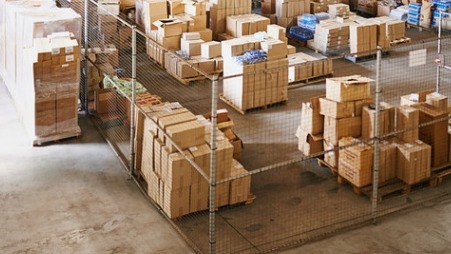
bonded warehouse
Definition
A bonded warehouse is a secured facility authorized by customs where imported goods can be stored without payment of duties until they are released for domestic consumption or exported. Businesses use bonded warehouses to defer duty payments, consolidate shipments, and complete customs formalities.
Overview
Definition and purpose
Manipulation and Value-Added Services (VAS) in bond refer to permitted activities performed on imported goods stored under customs control so that duties and taxes remain deferred until the goods are released into the domestic market. These activities are designed to prepare goods for sale, distribution, or final shipment without triggering import duty or altering the product's essential identity. The arrangement enables importers and 3PLs to respond quickly to market demand, perform localization steps, and reduce landed cost exposure until the final destination or sale is confirmed.
Regulatory framework and common classifications
Customs authorities typically define permissible bond activities in regulatory classes. A frequent classification for such operations is Class 8, which authorizes specific non-manufacturing operations like kitting, labeling, repacking, inspection, sorting, and simple assembly that do not constitute a fundamental change of the imported item. By contrast, activities that materially alter the product (for example, chemical processing or full manufacturing) generally require a manufacturing license or operation under a separate regime such as a Class 6 (customs manufacturing) authorization.
Examples of permitted VAS
Common VAS performed in bonded facilities include:
- Kitting and bundling: combining multiple imported components into a single saleable kit while retaining the original tariff identity of each component.
- Labeling and tagging: adding local language labels, compliance markings, or retail price tags after the final destination or SKU is determined.
- Repacking and relabeling: changing retail packaging or unit quantities (e.g., converting bulk cartons into single-unit retail packs) without changing the product itself.
- Inspection, testing, and quality checks: non-destructive checks to confirm conformance before release or re-export.
- Sorting and reprioritizing: separating goods by order, channel, or destination for fulfillment operations.
2026 e-commerce relevance—operational benefits
For e-commerce in 2026 and beyond, bonded VAS enables inventory models that support speed, flexibility, and cost control. Importers can bring goods in bulk into a bonded 3PL facility and defer duties until the item’s final destination and market are known. This makes it possible to:
- Break bulk: split large import consignments into individual consumer orders or smaller lots at the point of demand.
- Localize: apply market-specific labels, safety warnings, or translations only for units destined for that market, reducing returns and compliance risk.
- Reduce cashflow impact: delay duty payments until sale or domestic release, improving working capital.
- Improve fulfillment speed: pre-position bulk stock centrally and perform final packing and labeling close to customers for faster delivery.
Compliance boundaries—what is not allowed
In standard bonded storage, customs rules usually forbid any operation that results in a "fundamental change" to the imported goods. A fundamental change is an alteration that transforms the nature, use, or tariff classification of a product—examples include chemical processing, machining that creates a new product, or combining materials so the result is a distinct article. If such manufacturing is intended, the facility must operate under an approved manufacturing-in-bond regime (e.g., Class 6) and comply with additional licensing, accounting, and reporting requirements.
Operational controls and documentation
To lawfully perform VAS in bond, operators must maintain strict controls and records that satisfy customs authorities. Typical requirements include:
- Customs authorization: documented approval for Class 8 operations or equivalent.
- Secure premises: controlled access, surveillance, and segregation of bonded stock from non-bonded goods.
- Traceability: lot and serial-level tracking in WMS/TMS systems showing goods’ bonded status at every step.
- Transaction records: detailed logs of VAS performed, materials used in repacking, and final destination or customs release documents.
- Regular audits and reconciliation: stock counts, reconciliation with customs declarations, and audit readiness.
Practical steps for 3PLs and shippers
To implement compliant VAS in bond, follow these practical steps:
- Confirm regulatory scope with customs: verify which activities the bonded status permits and whether additional licensing is required.
- Define Standard Operating Procedures (SOPs): document permitted workflows for kitting, labeling, and repacking, including how to handle waste and materials.
- Integrate systems: ensure WMS and customs-entry systems tag and report bonded stock status in real time.
- Train staff: ensure operations and compliance teams understand limits on fundamental change and proper documentation practices.
- Set segregation and security controls: physically separate bonded inventory and restrict access to authorized personnel.
Common mistakes and risk mitigation
Typical mistakes include performing unapproved manufacturing steps, inadequate recordkeeping, and mixing bonded with non-bonded stock. Mitigation measures include clear SOPs, routine compliance training, frequent reconciliations, and pre-clearance consultation with customs brokers. Penalties for non-compliance can include fines, seizure of goods, retrospective duty assessments, and suspension of bonded privileges.
Real-world example
An electronics importer ships 10,000 units of a gadget into a bonded 3PL in 2026. While stock is bonded, the 3PL performs inspection, applies market-specific warranty cards and regulatory labels, and kittings for seasonal bundles. Only when orders are placed are individual units repacked into retail boxes and released to the domestic market—with duties and VAT calculated at the point of release. If the importer later decides to re-export unsold units, they can do so without ever having paid local duties.
Conclusion
Manipulation and VAS in bond provide powerful flexibility for modern global supply chains, especially for e-commerce, by deferring duty costs and enabling last‑mile personalization. The key to leveraging these services is rigorous adherence to customs rules that prohibit fundamental changes, robust operational controls, and accurate recordkeeping to satisfy regulatory scrutiny.
More from this term
Looking for a 3PL?
Compare warehouses on Racklify and find the right logistics partner for your business.