
Over-the-Road (OTR) Tanker Operations: Smooth-Bore vs. Baffled Trailers
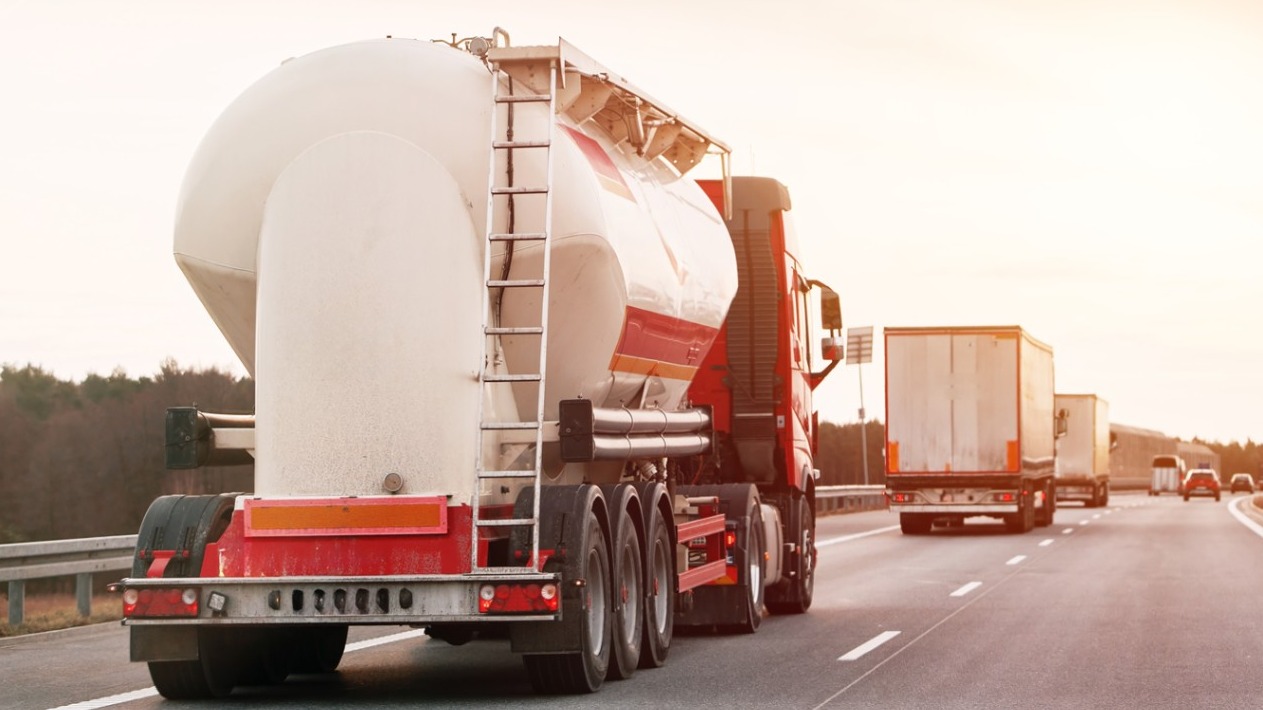
Liquid Shipping
Definition
Liquid shipping is the movement of liquid cargo, such as chemicals, fuels, edible oils, and beverages, using specialized equipment like tankers, ISO tank containers, and tank trucks. It includes loading, containment, temperature control, compatibility checks, and regulatory safety measures to prevent spills, contamination, and product degradation during transport.
Overview
Over-the-road (OTR) tanker operations require careful matching of trailer design to the chemical, sanitary and operational profile of the payload. The two primary interior approaches are smooth-bore tankers—continuous, unobstructed stainless-steel shells used when sanitary cleaning and sterility are essential—and baffled or compartmentalized tankers, which use internal flow-reduction structures or discrete compartments for momentum control, cargo segregation and operational flexibility. Selecting the correct design affects cleaning procedures, regulatory compliance, driver handling, safety and total cost of ownership.
Smooth-bore tankers have entirely smooth internal walls and continuous internal geometry with no structural projections or internal walls. These trailers are typically constructed of polished stainless steel, often electropolished, and designed to meet stringent sanitary standards required for food-grade and pharmaceutical liquids such as milk, juices, edible oils and liquid sugar. The absence of seams, crevices and internal fixtures minimizes bacterial harborage points, simplifying cleaning, sanitizing and validation protocols. Many smooth-bore tankers are designed to meet or exceed sanitary standards set by food safety programs and regulatory agencies requiring cleanability and traceability.
Advantages of smooth-bore tankers include:
- Sanitary cleanability: No internal crevices reduces microbial and residue retention, enabling validated cleaning and sterilization cycles.
- Compatibility for food and pharma: Stainless-steel surfaces and weld finishes lower contamination risk and preserve product integrity.
- Simple internal geometry: Easier to inspect and certify between loads.
Key trade-offs and operational considerations for smooth-bore tankers:
- Fluid surge (sloshing): A smooth, unobstructed tank presents minimal internal resistance to free liquid movement. During braking, turning or acceleration, the liquid can move rapidly and create large, shifting forces that affect vehicle stability. This requires highly skilled drivers trained in anticipating and managing momentum transfer.
- Driver technique and route planning: Drivers must use gradual braking, reduced cornering speeds, and adapt routing to minimize sudden stops. Loading practices (filling to optimal levels), baffle-like operational techniques (e.g., partial fill considerations) and adherence to speed and distance policies are essential.
- Higher operational risk: Because of surge, smooth-bore trailers often have stricter speed limits and insurance considerations, and accidents can be more severe if a driver does not control the load dynamics.
Baffled and compartmentalized tankers are common for non-sanitary bulk liquids such as petroleum products, industrial chemicals and certain agricultural liquids. Baffles are internal walls with openings or perforations that allow limited flow between chambers to dissipate momentum and reduce free-surface movement. Compartmentalized tanks divide the trailer into independent sealed sections that carry different products or grades simultaneously.
Advantages of baffled and compartmentalized designs:
- Reduced surge: Baffles break up fluid momentum and reduce lateral and longitudinal forces during maneuvers, improving vehicle stability and safety.
- Operational flexibility: Compartments allow multi-grade deliveries—common in fuel distribution—enabling a single run to serve multiple grades or customers.
- Easier driver handling: Reduced slosh lowers the need for extreme driver techniques, enabling higher allowable speeds and more forgiving dynamics.
Limitations and operational notes for baffled/compartmentalized tankers:
- Sanitation concerns: Internal baffles create surfaces that can trap residue and are difficult to fully sanitize, making these designs unsuitable for food-grade hauls unless dedicated to non-edible products.
- Cleaning complexity: Baffles and partitions complicate cleaning and inspection; more extensive wash procedures or specialized equipment may be required for some non-food chemical changes.
- Compartments require planning: Load planning must account for compartment volumes, density differences, weight distribution and specific gravity to avoid axle overloads and ensure regulatory compliance.
Regulatory and safety considerations: Fleet managers must consider federal and local regulations, product-specific standards and industry best practices. Food-grade hauling typically requires adherence to sanitary transport standards, validated cleaning and documentation for traceability. Hazardous materials such as fuels and many industrial chemicals fall under DOT and hazardous materials regulations specifying placarding, emergency response information and equipment such as pressure relief systems or grounding and bonding for flammable liquids.
Operational best practices for fleet managers:
- Match trailer type to product: Use smooth-bore stainless steel for any load requiring sanitary cleaning; reserve baffled or compartmentalized trailers for non-sanitary bulk liquids.
- Develop cleaning and documentation protocols: Validate cleaning cycles for smooth-bores and keep rigorous records; for baffled tanks, ensure cleaning routines address trapped pockets and residues where feasible.
- Train drivers on handling dynamics: Provide specific training on surge management for smooth-bore trailers and weight/compartment management for multi-compartment loads.
- Implement loading limits and weight distribution checks: Avoid partial fills that increase surge risk unless load and route are optimized for that condition.
- Inspect and maintain internal structures: Regularly inspect welds, fittings, valves and internal coatings; maintain sanitary finishes on smooth-bores.
- Plan routing and emergency procedures: Limit high-speed highways for unstable loads where appropriate and ensure hazmat response plans are current where applicable.
Common mistakes to avoid: Using a baffled or compartmentalized trailer for food-grade loads; under-training drivers for smooth-bore surge dynamics; inadequate cleaning or documentation; poor compartment-loading practices that create unsafe weight distributions; and mixing incompatible products in shared compartments.
In summary, the choice between smooth-bore and baffled/compartmentalized tankers is driven by cargo sanitary requirements, safety and operational trade-offs. Smooth-bore trailers are essential for sanitary, food-grade shipments but demand heightened driver skill and operational controls to manage fluid dynamics. Baffled and compartmentalized trailers offer improved stability and delivery flexibility for non-sanitary product classes but are ill-suited for loads requiring validated sterility. Fleet managers should set selection criteria based on product type, regulatory obligations, route risk, driver training programs and total lifecycle costs to ensure safe, compliant and efficient OTR liquid transport.
Sources And Additional Reading (3)
- Industry Guidance for Recalls
“Industry Guidance for Recalls.” U.S. FDA, https://www.fda.gov/safety/recalls-market-withdrawals-safety-alerts/industry-guidance-recalls.
- Ecommerce Packaging and Reverse Logistics
“Ecommerce Packaging and Reverse Logistics.” Packaging Digest, https://www.packagingdigest.com/ecommerce/the-weak-link-in-ecommerce-packaging.
- Logistics Resources
“Logistics Resources.” SupplyChainBrain, https://www.supplychainbrain.com/.
More from this term
Looking for a 3PL?
Compare warehouses on Racklify and find the right logistics partner for your business.