
Foundations of Amazon Buy Shipping and the Merchant Stack

Definition
Amazon Buy Shipping is an integrated marketplace shipping service that lets Fulfilled by Merchant (FBM) and Seller Fulfilled Prime (SFP) merchants buy carrier-verified shipping labels inside Seller Central or via the Merchant Fulfillment API, with automatic tracking registration and delivery-promise validation.
Overview
What it is and why it exists
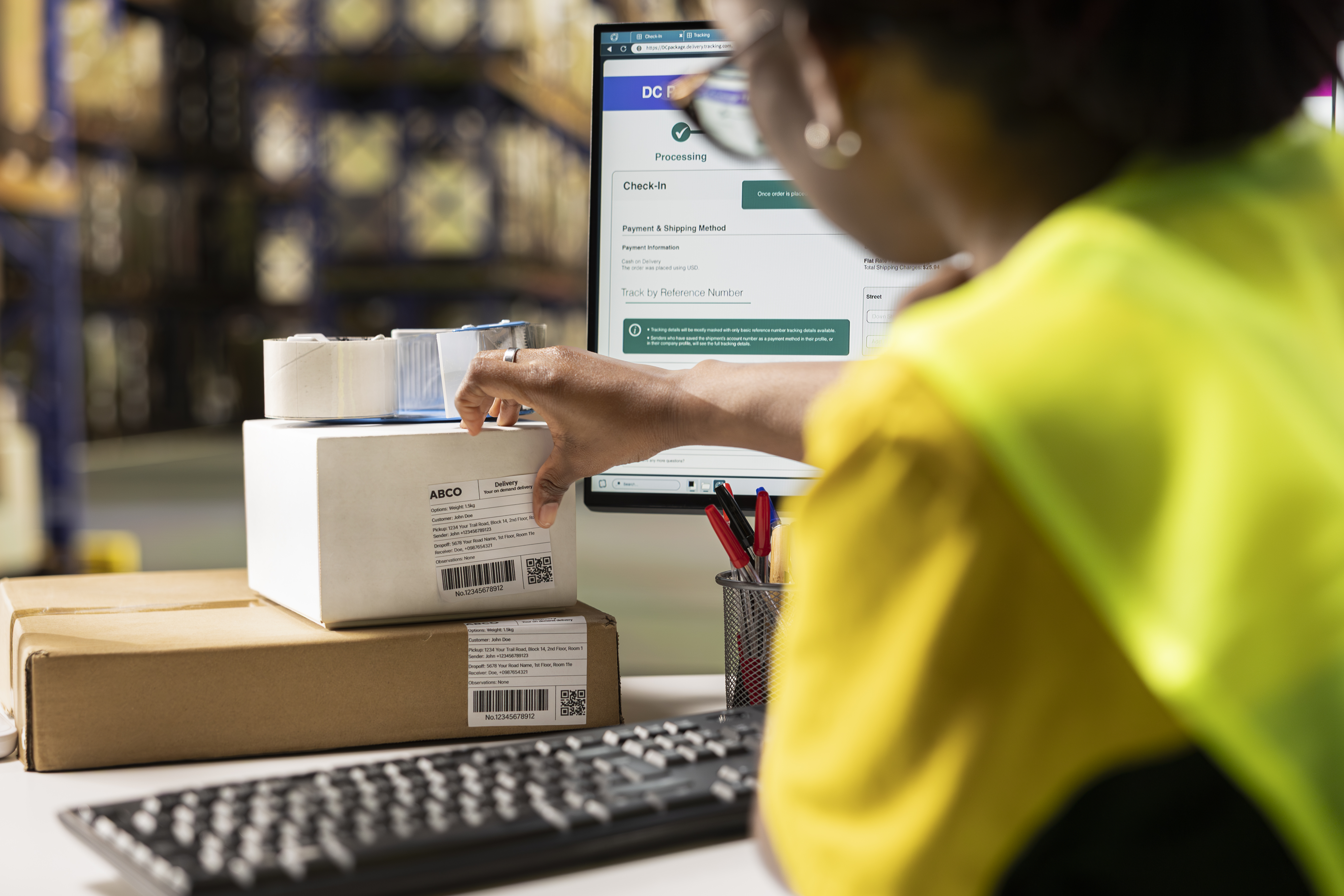
Amazon Buy Shipping is a built-in label-purchase and shipment-validation service offered inside Seller Central and accessible programmatically via Amazon’s Merchant Fulfillment API. It enables merchants who handle their own fulfillment (FBM and SFP) to generate carrier-verified shipping labels that are pre-validated against Amazon’s delivery promises. The feature streamlines label creation, ensures tracking is recorded in Amazon’s systems immediately, and enforces Amazon’s delivery-window guarantees by restricting carrier-service choices to options mathematically capable of meeting the promised delivery date.
How it fits into the merchant stack
In a typical merchant technology stack, Buy Shipping sits between order management and carrier execution. It replaces or complements external shipping software by providing:
- Label generation and purchase (via Seller Central UI or Merchant Fulfillment API).
- Automatic tracking ingestion into Amazon’s order lifecycle, removing manual "confirm shipment" steps.
- Carrier-service selection that is pre-filtered to meet Amazon’s service-level commitments (Prime, standard delivery promises, etc.).
Buy Shipping therefore acts as an operational guardrail and a connectivity layer: it both limits risky shipping choices and ensures seamless data synchronization into Amazon’s marketplace systems.
Core operational behaviors (the guardrails)
Unlike independent label purchase workflows, Buy Shipping enforces delivery promise validation. When a merchant or automated system requests label options, Amazon evaluates:
- Order destination and requested delivery window.
- Carrier transit times and service-level performance for the ship-from location.
- Cutoff times, weekends, and holidays that affect transit.
Only carrier services that are statistically capable of delivering within the required window are presented or permitted. This prevents accidental selection of slower services that could result in late delivery, negative seller metrics, or customer dissatisfaction.
What happens when you buy a label
When a label is purchased through Buy Shipping:
- Amazon either purchases a label via a contracted carrier or generates a label tied to the merchant’s carrier account, depending on configuration and available carrier integrations.
- The generated label includes carrier tracking that is immediately registered to the Amazon order. This removes the need for a separate "confirm shipment" API call or manual confirmation step.
- Tracking updates flow into Amazon’s tracking system (and thus into the buyer’s order page) as carriers provide updates.
Integration points
There are two common integration patterns:
- Seller Central UI — merchants manually purchase and print labels, best for lower-volume sellers or ad-hoc shipments.
- Merchant Fulfillment API — programmatic label requests, suited to high-volume sellers, multi-location fulfillment platforms, and third-party logistics (3PL) integrations.
Either method yields the same benefits: validated service selection, immediate tracking registration, and reduced operational overhead.
Benefits for merchants
- Reduced operational steps — no separate shipment confirmation required for Amazon order state updates.
- Lower risk of late deliveries — Amazon’s service filtering limits the chance of picking a carrier service that misses the delivery promise.
- Simpler customer experience — tracking appears automatically in buyer communications and the Amazon order page.
- Better marketplace metrics — timely tracking and accurate service selection help preserve seller performance metrics tied to on-time delivery.
Common use cases and examples
Example 1: An FBM merchant selling small electronics uses Seller Central to buy USPS Priority labels. Because Amazon restricts services to those that meet the buyer’s selected delivery window, the merchant cannot accidentally select a slower parcel ground service that would miss the delivery promise.
Example 2: A high-volume seller integrates their warehouse management system with the Merchant Fulfillment API. When orders are packed, the WMS calls the API, receives Amazon-validated carrier options, purchases the label, prints the shipping receipt, and Amazon automatically records the tracking number — eliminating manual steps.
Best practices for merchants
- Integrate with the Merchant Fulfillment API for automated, scalable label generation and to reduce human error.
- Keep accurate ship-from location and processing-cutoff configuration in Seller Central, since transit calculations depend on this data.
- Plan packing and pickup windows around carrier cutoff times to ensure selected services remain valid.
- Monitor carrier performance and exceptions; even validated services can experience delays due to weather or carrier disruptions.
- Document and train operations staff about the guardrail behavior so they understand why certain services may be unavailable.
Common mistakes and limitations
- Assuming all carriers or service levels are available — Amazon may restrict certain services if they cannot meet the promise from your ship-from location.
- Relying solely on Buy Shipping for exception handling — merchants still must monitor for carrier delays and respond to customer inquiries or claims.
- Using incorrect origin addresses or cutoff times — this can result in Amazon presenting fewer or slower service options than expected.
- Neglecting rate comparison — Buy Shipping provides validated service options but merchants should still consider costs, especially when using their own carrier accounts through separate arrangements.
Alternatives and when to consider them
Third-party shipping software and transportation management systems (TMS) offer advanced routing, rate-shopping, multi-carrier optimization, and bespoke label workflows. Large sellers or 3PLs that require complex carrier contract management, batch rating across many carriers, or advanced analytics may integrate both Buy Shipping (to comply with Amazon promises) and external systems (for broader optimization). When doing so, ensure your external system triggers Buy Shipping for Amazon orders or mirrors Amazon’s constraints to avoid conflicts.
Operational checklist to implement Buy Shipping
- Confirm account type and eligibility for Buy Shipping in Seller Central.
- Set accurate ship-from addresses and processing times in Seller Central settings.
- Decide UI vs API integration based on volume and automation needs.
- Test label creation and tracking registration in a sandbox or test orders where possible.
- Train warehouse staff on printing labels and handling exceptions reported by carriers or Amazon.
Summary
Amazon Buy Shipping is a merchant-facing label purchase and validation service that enforces delivery promises by restricting carrier options to those that can meet Amazon’s windows, automatically registers tracking into Amazon’s systems, and reduces manual steps for FBM and SFP sellers. It is a practical operational guardrail inside the merchant stack and is most effective when integrated programmatically for scale, combined with robust operational controls and exception monitoring.
Sources And Additional Reading (3)
- Amazon Buy Shipping
“Amazon Buy Shipping.” Amazon, https://sell.amazon.com/tools/buy-shipping.
- Amazon Shipping
“Amazon Shipping.” Amazon, https://sell.amazon.com/programs/shipping.
- How to Pack and Ship Ecommerce Orders
“How to Pack and Ship Ecommerce Orders.” Amazon, https://sell.amazon.com/blog/pack-ship-fulfill-orders.
🔗
Related Terms
6150 EUR Customs Cliff
The "150 EUR Customs Cliff" refers to the import-value threshold—commonly applied in the EU—above which goods become lia...2D Imager Scanner
A camera-based scanner that captures both 1D and 2D barcodes (such as QR and Data Matrix) from various angles and surfac...36 x 36 pallet
A smaller square pallet used for compact loads, store displays, small shipments, or specialty products.3PL
Third-Party Logistics: an external provider that manages outsourced logistics services such as warehousing, order fulfil...3PL Brokerage
A 3PL brokerage is a third-party logistics service that matches shippers with carriers to arrange freight transportation...More from this term
Looking for a 3PL?
Compare warehouses on Racklify and find the right logistics partner for your business.