
Flammable Liquid Transportation: Safety Strategies for Modern Supply Chains
Definition
Practical strategies and controls to move flammable liquids safely through supply chains, balancing regulatory compliance, risk reduction, and operational efficiency.
Overview
Transporting flammable liquids is a routine but high-stakes part of many supply chains. These liquids—ranging from fuels and solvents to some alcohols—present fire and explosion hazards if they ignite, vaporize, or leak. Modern supply chains must combine regulatory compliance, strong operational procedures, appropriate packaging, and technology to manage those risks while maintaining throughput and cost-effectiveness.
The following sections explain core safety strategies in clear, practical terms. They are written for logistics professionals and managers who want actionable guidance without technical jargon.
1. Understand the product and regulatory environment
Start by classifying the flammable liquid. Classification (often based on flash point and vapor pressure) determines packaging, labeling, and transport mode. Know the applicable regulations for each leg of transit: international (IMDG for sea, ICAO-TI/IATA DGR for air), regional, and national rules. For road and rail, consult ADR, DOT/49CFR, or local equivalents. Regulatory compliance is the foundation of every safe transport plan.
2. Use correct packaging and containment
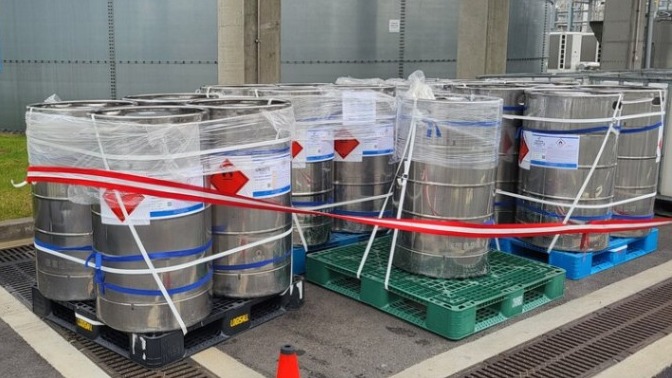
Choose containers certified for the specific liquid and mode of transport—UN-approved drums, intermediate bulk containers (IBCs), or tanker trailers. Key considerations include material compatibility, pressure-relief features, and secondary containment to control leaks. For bulk tank moves, verify tank integrity, lining compatibility, and proper loading/unloading procedures to avoid overfilling and excessive sloshing.
3. Secure and segregate appropriately
Segregation reduces the chance of dangerous interactions during a spill. Store and transport incompatible substances apart (e.g., oxidizers separated from flammable liquids). Secure packages within vehicles to prevent movement and impact. Use dunnage, straps, and bulkhead separation where needed, and ensure vehicle compartments are equipped to contain minor leaks until an incident can be managed.
4. Labeling, documentation, and placarding
Accurate shipping papers, safety data sheets (SDS), proper UN numbers, hazard labels, and vehicle placards are essential. First responders rely on this information in an emergency. Ensure each shipment carries the right documentation for every jurisdiction it will pass through, and keep digital copies accessible for quick retrieval.
5. Carrier selection and training
Choose carriers with experience handling flammable liquids and with trained drivers. Carrier audits should verify driver certifications, vehicle maintenance, emergency equipment, and adherence to operating procedures. Provide specialized training for loading/unloading personnel and drivers that covers product-specific hazards, emergency shutdown, and spill containment procedures.
6. Operational controls and standard procedures
Develop and enforce standard operating procedures (SOPs) for key activities: loading, securing, transfer, parking, hot work restrictions, and refused shipments. Include pre-trip vehicle checks, verification of seals, and stop-check protocols for long hauls. SOPs reduce routine errors and ensure consistent handling across teams and partners.
7. Use technology for visibility and control
Telematics, GPS tracking, and electronic documentation increase visibility and speed response. Temperature and leak sensors on tanks and IBCs can alert to abnormal conditions. Transport management systems (TMS) that integrate regulatory checks, route planning (avoiding densely populated areas when appropriate), and carrier credentials help enforce compliance and reduce risk exposure.
8. Route planning and risk assessment
Plan routes to minimize time in congested or high-risk areas, and consider restrictions like tunnels or bridges that limit certain hazardous loads. Conduct a risk assessment that considers population density, environmental sensitivity, seasonal weather, and road conditions. Identify safe stopping points, refueling locations, and emergency response resources along the route.
9. Emergency preparedness and coordination
Have an incident management plan that includes communication protocols, containment materials, and designated personnel. Coordinate with local emergency services along routine routes and share SDS and shipment details in advance where appropriate. Regular emergency drills build readiness and highlight gaps in plans or equipment.
10. Maintenance, inspection, and quality assurance
Regular inspection of tanks, hoses, valves, packaging, and leak-detection systems prevents mechanical failures. Implement a maintenance schedule and a quality assurance process that verifies container integrity, calibration of safety devices, and correct labeling prior to departure.
11. Incident analysis and continuous improvement
After every near miss or incident, perform root-cause analysis and share lessons learned across the organization and carriers. Use incident data to refine SOPs, training, and equipment choices. Continuous improvement helps lower long-term risk and operating costs.
12. Balance safety and business needs
Safety controls can add cost and time, so align risk mitigation with your company’s risk tolerance and the value of the goods. For high-volume, repetitive moves, invest in automation and specialized equipment; for occasional shipments, partner with experienced hazardous materials carriers. Cost-benefit analysis should include potential incident costs and reputational impact, not just immediate transport fees.
Common implementation mistakes
- Relying solely on paperwork without verifying packaging or carrier competence.
- Underestimating the differences in regulations across borders or modes of transport.
- Neglecting secondary containment and vehicle securing, which leads to preventable spills.
- Failing to train non-transport staff (warehouse or dock teams) who handle the product.
Real-world example
A consumer chemical manufacturer switched from mixed-mode pallet shipments with multiple carriers to a single vetted carrier for all Class 3 liquids. The company standardized on UN-certified IBCs, implemented electronic SDS access for drivers, and used GPS tracking. Over 18 months they saw fewer incidents, faster response times for leaks, and lower insurance premiums—illustrating how process standardization and the right technology reduce risk and cost.
Final note
Transporting flammable liquids safely requires a systems approach: classify the product correctly, use certified containment, train people, leverage technology, and continuously improve. By combining these strategies, supply chains can move flammable liquids efficiently while protecting people, property, and the environment.
Sources And Additional Reading (3)
- Flammable Liquids - 1910.106
“Flammable Liquids - 1910.106.” OSHA, https://www.osha.gov/laws-regs/regulations/standardnumber/1910/1910.106.
- Hazardous Materials Regulations
“Hazardous Materials Regulations.” PHMSA, https://www.phmsa.dot.gov/standards-rulemaking/hazmat/hazardous-materials-regulations.
- NFPA 30: Flammable and Combustible Liquids Code
“NFPA 30: Flammable and Combustible Liquids Code.” NFPA, https://www.nfpa.org/codes-and-standards/nfpa-30-standard-development/30.
🔗
Related Terms
6150 EUR Customs Cliff
The "150 EUR Customs Cliff" refers to the import-value threshold—commonly applied in the EU—above which goods become lia...2D Imager Scanner
A camera-based scanner that captures both 1D and 2D barcodes (such as QR and Data Matrix) from various angles and surfac...36 x 36 pallet
A smaller square pallet used for compact loads, store displays, small shipments, or specialty products.3PL
Third-Party Logistics: an external provider that manages outsourced logistics services such as warehousing, order fulfil...3PL Brokerage
A 3PL brokerage is a third-party logistics service that matches shippers with carriers to arrange freight transportation...More from this term
Looking for a 3PL?
Compare warehouses on Racklify and find the right logistics partner for your business.