
Shadow Warehouse vs. Traditional Distribution Center
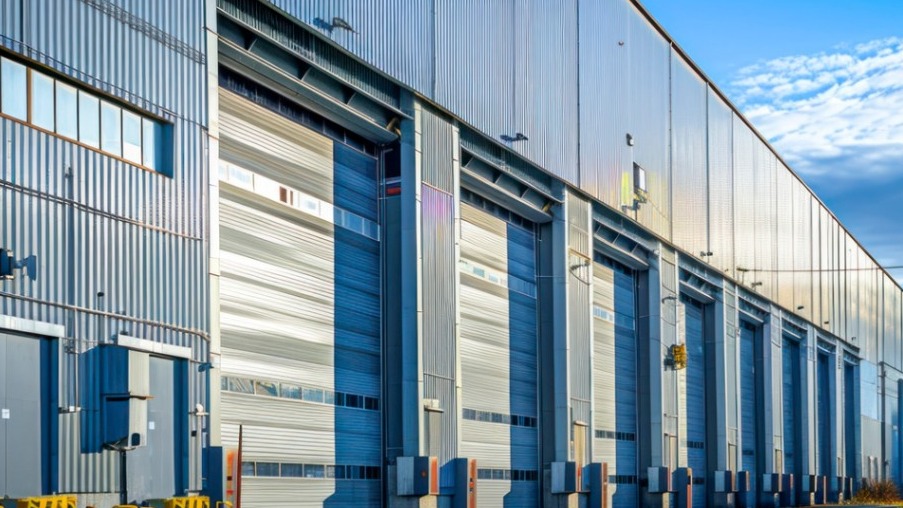
Shadow Warehouse
Definition
A Shadow Warehouse is a short-term, pop-up storage and fulfillment location activated to handle sudden increases in demand. It provides additional capacity near core operations to prevent delays and maintain service levels, typically on temporary contracts with limited services and staffing.
Overview
This comparative guide explains the operational, strategic, and site-selection differences between Shadow Warehouses and Traditional Distribution Centers (DCs). It focuses on three high-impact metrics for modern supply chains: throughput speed, inventory turnover, and the logic that drives site selection. The intent is to help logistics planners, operations managers, and supply chain students understand when each model is appropriate and what trade-offs to expect.
Defining the two models
Traditional Distribution Centers are purpose-built facilities that handle bulk storage, long-term holding of inventory, and consolidated outbound shipments. They typically operate at larger scale, serving regional or national networks, and optimize for cost-per-unit stored and shipped. Shadow Warehouses (also called micro-fulfillment hubs or shadow DCs in some contexts) are compact, high-velocity facilities designed for rapid processing of small parcels and time-sensitive orders. Shadow Warehouses often act as extensions of the primary network, positioned near demand centers to reduce delivery lead times.
Throughput speed
Throughput speed is the rate at which goods move into, through, and out of a facility. It is the most visible difference between shadow warehouses and traditional DCs.
- Traditional DCs: These facilities optimize for batch processing and pallet-level throughput. Receiving often occurs in larger inbound waves, inventory is stored for longer durations, and outbound shipments are consolidated into LTL/FTL loads or palletized orders. Pick cycles may be less frequent per-SKU, and processes prioritize accuracy and cost-efficiency over immediate speed.
- Shadow Warehouses: Designed for continuous, rapid fulfillment of small orders, shadow warehouses minimize touch-points and use pick-to-order flows, often with a high degree of automation or lightweight mechanization. They emphasize same-day or next-day parcel throughput, reducing order-to-delivery time by positioning inventory close to customers and streamlining inbound-to-outbound sequencing.
Practical implication: If your KPIs are measured in minutes or hours from order receipt to carrier handoff (typical for e-commerce last-mile), a shadow warehouse will outperform a traditional DC. Conversely, for bulk replenishment or multi-day lead times, a traditional DC is more cost-effective.
Inventory turnover
Inventory turnover measures how frequently stock is sold and replenished over a period. It reflects demand patterns and inventory strategy.
- Traditional DCs: Often hold slower-moving SKUs in bulk, enabling economies of scale and supplier consolidation. Turnover rates tend to be lower (i.e., inventory stays on shelves longer) because DCs serve broader distribution cycles: replenishment to regional stores, restocking for multiple sales channels, and buffering for seasonality.
- Shadow Warehouses: Optimize for high-turnover SKUs and fast-moving assortments. Their narrow SKU breadth and proximity to demand mean higher turnover rates; inventory is cycled rapidly to support frequent small-order fulfillment. Because of this, safety stock policies differ: shadow warehouses carry less safety stock per SKU but rely on rapid replenishment from upstream DCs or suppliers.
Operational consideration: Companies with a high percentage of fast-moving consumer SKUs or urban e-commerce demand benefit from deploying shadow warehouses to improve turnover and reduce working capital tied up in inventory.
Site selection logic
Choosing locations for each facility type is driven by different variables and trade-offs.
- Traditional DC site logic: Prioritizes land availability, lower real estate cost per square foot, highway and intermodal access, and space for staging and long-term storage. Proximity to suppliers, freight corridors, and economies of scale are key. Typical locations are suburban industrial parks, freight clusters near ports, or inland logistics hubs that balance labor availability and transportation cost.
- Shadow Warehouse site logic: Prioritizes proximity to demand, last-mile routing efficiency, and speed to consumer. Sites are often urban or near-urban, in multi-story buildings or repurposed retail/industrial spaces, with emphasis on labor access, regulatory constraints (e.g., zoning, noise), loading dock flexibility, and carrier access for parcel pickup. Real estate cost per square foot is higher, but the value comes from reduced delivery distance and faster SLAs.
Example: A national apparel brand may keep finish goods in a traditional DC outside a port to consolidate imports and minimize freight costs. To meet same-day metropolitan deliveries, it would deploy shadow warehouses in major cities that hold top-selling sizes and styles, replenished nightly from the main DC.
Technology and process differences
Both models can leverage modern warehouse management systems (WMS) and automation, but the application focus differs.
- Traditional DCs: Emphasize systems for pallet and case handling, order consolidation, labor management for large teams, slotting optimization for a broad SKU range, and integration with TMS for inbound/outbound freight optimization.
- Shadow Warehouses: Prioritize high-speed pick-and-pack automation, real-time inventory visibility at SKU/serial level, micro-fulfillment software, rapid replenishment triggers, and seamless integration with e-commerce platforms and last-mile carriers. Scalability often comes from modular automation and flexible staffing.
Cost trade-offs and business fit
Shadow warehouses increase operational cost per square foot and require more frequent replenishment moves, but they deliver value through faster delivery, higher customer satisfaction, and reduced last-mile costs. Traditional DCs minimize unit storage and handling cost but add transit time and last-mile expense for customers close to urban centers.
Best practices and hybrid strategies
Most modern networks combine both models. Best practices include:
- Use a hub-and-spoke model: central DCs for bulk storage and urban shadow warehouses for time-sensitive fulfillment.
- Define SKU allocation rules: move fast-moving SKUs to shadow warehouses and keep long-tail SKUs in traditional DCs.
- Automate replenishment between DCs and shadow hubs using demand forecasting and real-time inventory visibility.
- Optimize site selection with mixed metrics: delivery time probability maps, transportation cost modeling, and real estate feasibility studies.
Common pitfalls
Deploying shadow warehouses without integrated replenishment strategies can create stockouts or redundant inventory. Over-consolidating into a single traditional DC can inflate last-mile costs and harm service levels. Ensuring WMS/TMS integration and clear allocation rules is essential.
Conclusion
Shadow Warehouses and Traditional Distribution Centers serve complementary roles. The choice is not binary: throughput speed, inventory turnover, and site selection logic should guide a hybrid network design that balances cost, speed, and customer expectations. For high-velocity e-commerce, shadow warehouses unlock speed; for bulk logistics efficiency, traditional DCs remain fundamental.
Sources And Additional Reading (3)
- Amazon Seller Resources
“Amazon Seller Resources.” Amazon, https://sell.amazon.com/learn.
- Warehouse Management System
“Warehouse Management System.” Tecsys, https://www.tecsys.com/solutions/warehouse-management/.
- Fulfillment Resources
“Fulfillment Resources.” Stord, https://www.stord.com/resources.
More from this term
Looking for a 3PL?
Compare warehouses on Racklify and find the right logistics partner for your business.