
Suez Canal
Suez Canal
Definition
The Suez Canal is a man-made sea-level waterway in Egypt that connects the Mediterranean Sea to the Red Sea, allowing ships to travel directly between Europe and Asia without circumnavigating Africa. It is a vital global trade route and strategic chokepoint that significantly shortens transit times, reduces shipping costs, and carries a large share of the world’s container and oil shipments.
Overview
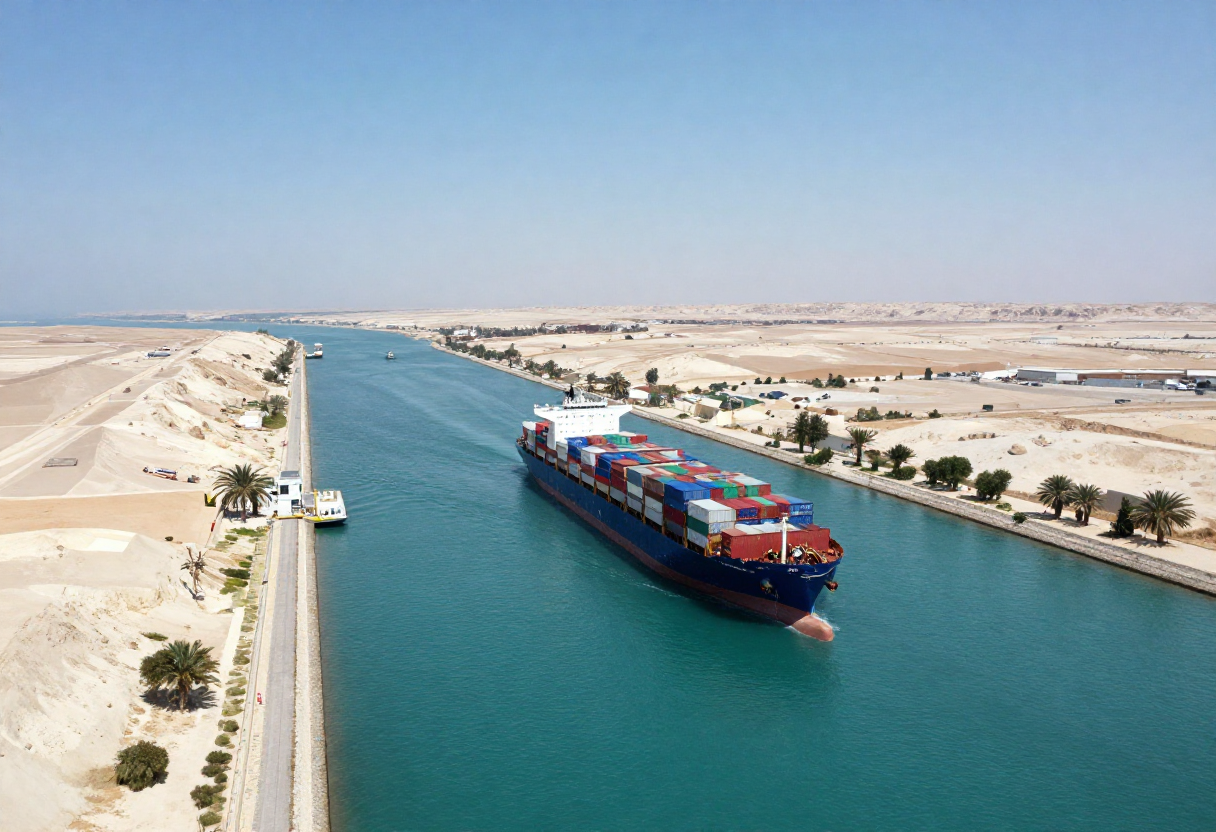 The Suez Canal is one of the world’s most important shipping routes. Opened in 1869, it cuts through the Isthmus of Suez in Egypt and provides a direct passage between the Mediterranean Sea and the Red Sea. For beginner learners, the key idea is simple: instead of sailing around the southern tip of Africa (the Cape of Good Hope), ships can use the Suez Canal to travel a much shorter distance between Europe and Asia, saving time, fuel, and money.
Basic facts that help you picture the canal:
- Length and size: The canal is about 193 kilometers (120 miles) long. Over the decades it has been widened and deepened to accommodate ever-larger ships.
- Single and double-track sections: Historically parts of the canal were single-lane (ships meet at passing areas), but expansions and new channels now allow more two-way traffic and larger convoys.
- Transit time: For many vessels, a transit through the canal takes about 12–16 hours, depending on traffic, vessel size, and scheduling.
Why the Suez Canal matters to everyday life:
- Lower costs and faster delivery: Shorter routes mean goods reach stores sooner and shipping companies spend less on fuel and labor.
- Global supply chains: Many everyday products — electronics, clothing, and food ingredients — often travel through the canal during part of their journey.
- Energy shipments: Tankers carrying oil and liquefied natural gas frequently use the canal, making it strategically important for global energy markets.
How transit works in friendly terms:
When a ship wants to use the Suez Canal, it typically contacts the Suez Canal Authority (SCA) to book a transit slot. For most vessels, a local canal pilot boards the ship to guide it safely through the waterway. Ships often travel in convoys arranged by the SCA, which helps manage traffic flow efficiently. Pilots are experienced professionals who know local conditions like currents, narrow sections, and passing zones.
Cost basics:
- Tolls: The SCA charges tolls based mainly on the vessel’s tonnage (size) and cargo type. Large container ships and tankers pay significant fees because of their size and value.
- Additional costs: Beyond tolls, ships may pay for pilotage, tug assistance, waiting time if there’s congestion, and port charges at their final destination.
Common misconceptions cleared up:
- Not a canal for cars: The Suez Canal is a maritime channel for ships only — vehicles cross the Isthmus of Suez by roads and bridges nearby.
- It isn’t always fast: Although it shortens distances, delays can happen due to traffic, maintenance, or incidents — and those delays can ripple through supply chains.
- Not free to use: Using the canal carries a fee, and that fee varies by ship size, type, and cargo.
Real-world example (simple): Imagine a container ship traveling from Shanghai to Rotterdam. If it goes through the Suez Canal, it will cut several days or even weeks off the journey compared with the longer route around Africa. That saves on fuel and lets products reach stores faster — a direct, practical benefit to companies and consumers.
The Suez Canal is a great example of how a single piece of infrastructure can influence global commerce, geopolitics, and everyday supply chains in very tangible ways.
Sources And Additional Reading (3)
- Whatnot Seller Academy
“Whatnot Seller Academy.” Whatnot, https://selleracademy.whatnot.com/guide.
- Ecommerce Packaging
“Ecommerce Packaging.” Packaging Digest, https://www.packagingdigest.com/ecommerce.
- 3PL Guide
“3PL Guide.” DCL Logistics, https://dclcorp.com/blog/3pl/guide-third-party-logistics-3pl-fulfillment-providers/.
More from this term
Looking for a 3PL?
Compare warehouses on Racklify and find the right logistics partner for your business.