
Supply chain: A friendly introduction for beginners

Supply Chain
Definition
A supply chain is the network of organizations, people, activities, information, and resources involved in producing and delivering a product or service from raw materials to the end customer. It covers sourcing, manufacturing, transportation, warehousing, and distribution, focusing on coordinating flows to meet demand efficiently and reliably.
Overview
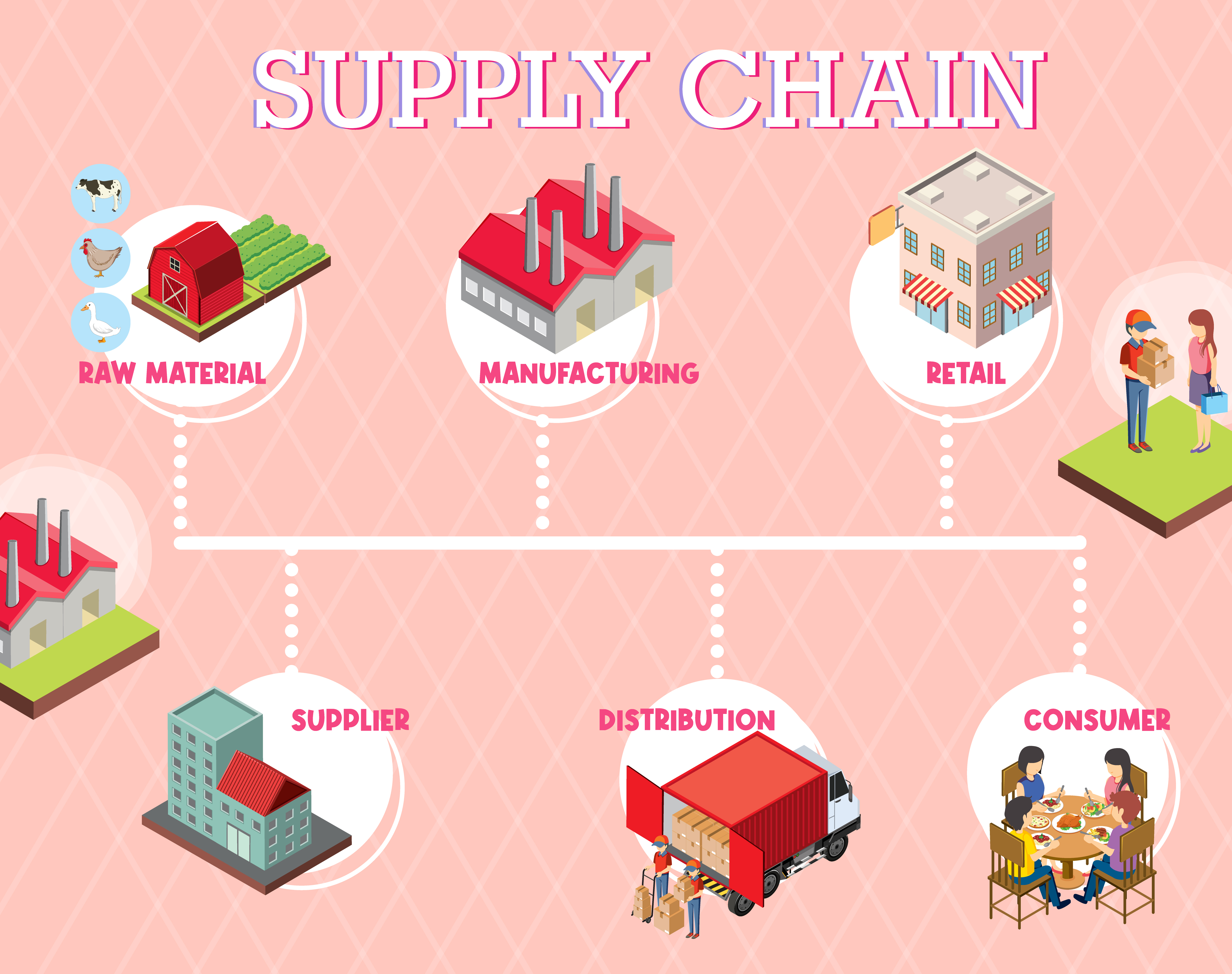
The term supply chain describes everything that happens between sourcing raw materials and the moment a customer receives a finished product. For beginners, it helps to think of a supply chain as a chain of connected steps — each link adds value and moves goods closer to the end user. A friendly, practical view makes the idea easy to relate to: when you order a t-shirt online, many different companies and processes worked together so that the shirt could be designed, produced, packed, shipped and finally delivered to your door.
Key elements you'll see in most supply chains:
- Sourcing and procurement — finding and buying raw materials or components from suppliers.
- Manufacturing and assembly — turning raw materials into finished goods or subassemblies.
- Warehousing — storing goods at different stages; warehouses may be public, private, bonded, or specialized like cold storage.
- Transportation — moving goods by road, rail, air or sea, and choosing services such as FTL, LTL, or express depending on cost and speed needs.
- Distribution and retail — getting the product to stores or directly to customers through fulfillment centers or e-commerce platforms.
- Returns and reverse logistics — handling product returns, repairs, recycling or disposal.
Every link involves people, facilities, equipment, and technology. Software platforms like WMS (Warehouse Management Systems), TMS (Transportation Management Systems), and ERP (Enterprise Resource Planning) play a big role in coordinating activities and keeping information flowing. For example, a WMS helps a warehouse pick, pack and ship orders efficiently; a TMS helps choose carriers and plan routes.
Why the supply chain matters to you as a beginner:
- Availability: A healthy supply chain means the products you want are available when you need them — whether that’s groceries, electronics, or parts for manufacturing.
- Cost: Efficient supply chain choices affect price. Better planning and logistics often reduce costs and waste.
- Speed and reliability: Good processes and the right mix of transportation and warehousing options improve delivery times and predictability.
- Sustainability: Suppliers, packaging choices, and transport modes all influence environmental impact — an increasingly important part of modern supply chains.
Practical example to make it concrete: consider a jar of coffee sold in a supermarket. The supply chain steps might include:
- Farmers grow and harvest coffee beans in one country.
- Processors clean and roast beans, then package them into bags.
- Exporters and freight forwarders move containers by sea to another country.
- A bonded or distribution warehouse receives, inspects and stores bags.
- A retailer orders inventory and the warehouse fulfills that order; a carrier delivers pallets to stores.
- Customers buy the coffee; any returns or quality issues trigger reverse logistics.
Common beginner misconceptions:
- Thinking a supply chain is only about transportation — it's also about sourcing, inventory, packaging, and information flows.
- Assuming one size fits all — supply chains vary widely by industry: perishable food needs cold storage and fast transit, while heavy industrial equipment focuses on secure handling and customs compliance.
- Believing technology solves everything — software is powerful, but people, processes and partnerships matter just as much.
Starting points if you want to learn more:
- Follow a simple product from origin to shelf — map each step and identify who is responsible.
- Learn basic metrics such as lead time (how long before a product arrives), inventory turnover (how often stock is used), and fill rate (how often customer demand is met).
- Explore common software used in supply chains — WMS for warehouses, TMS for transport, and ERP for company-wide coordination.
In short, a supply chain is the invisible backbone that connects producers to consumers. It blends people, processes, places and technology to ensure goods and services move efficiently and reliably. With a friendly, step-by-step approach, anyone can begin to understand how supply chains shape the products we use every day.
Sources And Additional Reading (3)
- Ecommerce Fulfillment Insights
“Ecommerce Fulfillment Insights.” Radial, https://www.radial.com/insights.
- Packaging Resources
“Packaging Resources.” Sealed Air, https://www.sealedair.com/resources.
- Fulfillment Resources
“Fulfillment Resources.” Amware Fulfillment, https://www.amwarelogistics.com/blog/.
More from this term
Looking for a 3PL?
Compare warehouses on Racklify and find the right logistics partner for your business.