
The Future of Industrial Fulfillment in Automated Warehousing
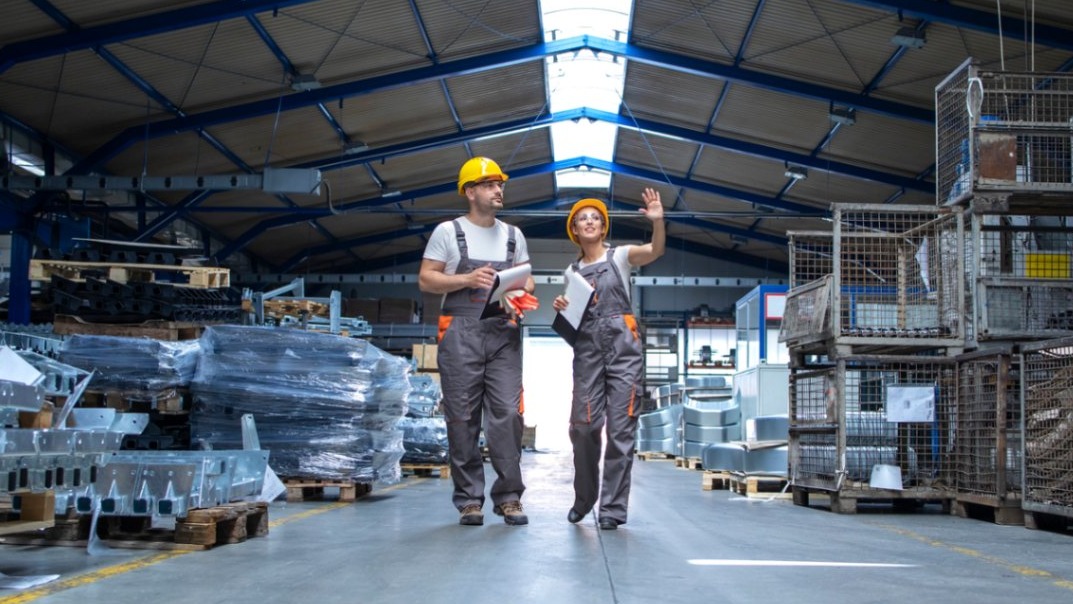
Industrial Fulfillment
Definition
Industrial fulfillment is the process of receiving, storing, assembling, packaging, and shipping industrial goods, components, and materials to business customers. It emphasizes bulk handling, kitting, regulatory compliance, and reliable logistics to support manufacturing, maintenance, and supply chain continuity.
Overview
Industrial fulfillment refers to the processes and systems used to pick, pack, stage, and move industrial-scale goods — such as machinery parts, bulk materials, pallets, and large assemblies — from a warehouse to a downstream customer, production line, or distribution hub. When paired with automated warehousing, industrial fulfillment becomes a technology-driven discipline in which robotics, conveyors, automated storage and retrieval systems (AS/RS), warehouse management software (WMS), and data-driven controls work together to increase throughput, consistency, and safety.
Why automation is changing industrial fulfillment
Automation addresses three core pressures common in industrial supply chains: volume (handling more units or heavier items), variability (large SKU sizes, irregular shapes, diverse packaging), and labor constraints (difficulty hiring and retaining skilled warehouse workers for heavy or repetitive tasks). Automated systems reduce manual handling risk, speed up movement of heavy loads, improve inventory accuracy, and enable predictable service levels for production schedules and large B2B orders.
Key technologies shaping the future
- Automated Storage & Retrieval Systems (AS/RS): vertical shuttles, crane systems, and pallet AS/RS maximize cube utilization and shorten retrieval times for palletized industrial goods.
- Autonomous Mobile Robots (AMRs) and AGVs: these vehicles move pallets, racks, and rolls across the warehouse floor with dynamic routing, reducing forklift traffic and enabling safer mixed-robot/human environments.
- Robotic picking and cobots: specialized end-effectors, suction, and gripping systems enable robots to handle awkwardly shaped or heavy items; collaborative robots (cobots) assist human workers for lifting and repetitive tasks.
- Conveyors and sortation systems: high-capacity conveyors, roller beds, and automated sorters help manage large unit flows and prepare multi-pallet shipments efficiently.
- Warehouse software stack: WMS, Warehouse Control Systems (WCS), Order Management Systems (OMS), and Transportation Management Systems (TMS) integrate to coordinate inventory, tasks, and outgoing freight.
- IoT, sensors, and digital twins: condition monitoring of equipment, RFID for asset tracking, and digital models of warehouse layouts support predictive maintenance and layout optimization.
- AI and advanced analytics: demand forecasting, slotting optimization, dynamic routing, and anomaly detection improve decision-making and reduce excess inventory and idle time.
Real-world examples
Automotive suppliers use pallet AS/RS and sequenced kitting to deliver parts to assembly lines just in time. Major e-commerce and third-party logistics providers have integrated AMRs with human pickers to reduce walking time and speed up order consolidation for heavy industrial components. A food processing plant might combine temperature-controlled AS/RS for ingredients with automated palletizers to handle high daily throughput reliably.
Benefits expected going forward
- Higher throughput and on-time fulfillment for large and irregular items.
- Improved worker safety and job enrichment as manual heavy lifting declines and supervision / technical roles increase.
- Better space utilization through vertical storage and dense racking enabled by AS/RS.
- Enhanced visibility across inbound materials, work-in-process, and outbound shipments via integrated software.
- Lower total cost of operations over time when automation is matched to consistent volumes and predictable flows.
Challenges and trade-offs
Automation requires significant capital investment and longer lead times for design and deployment than manual operations. Industrial fulfillment often involves irregularly shaped items, variable weights, and exceptions that are harder to fully automate. Integration between legacy ERP systems and modern WMS/WCS, safety certifications, and change management for workers are common hurdles. Return on investment is strongly dependent on volume, duty cycle, and the degree of task standardization.
Best practices for organizations planning to automate
- Start with thorough process mapping: document inbound/outbound flows, exception rates, peak periods, and physical dimensions.
- Prioritize hybrid automation: combine robotics for repetitive heavy tasks with human oversight for exceptions and quality checks.
- Invest in modular automation: choose systems that can scale (e.g., AMRs, modular conveyors) and avoid single-vendor lock-in where possible.
- Integrate software stacks early: ensure WMS, WCS, and ERP are aligned and support real-time data exchange and analytics.
- Plan workforce transition: create reskilling pathways, safety training, and roles for technicians and system operators.
- Measure outcomes: track accuracy, throughput, downtime, and worker safety to validate ROI and adjust operations.
Common mistakes to avoid
- Over-automating without a clear throughput or volume justification.
- Ignoring exception handling; every automated design must include easy human intervention for outliers.
- Underestimating integration complexity with legacy systems and processes.
- Neglecting lifecycle costs such as maintenance, spare parts, and software updates.
Looking ahead
As sensors, AI, and modular robotics become less expensive and more interoperable, automated warehousing for industrial fulfillment will shift from large greenfield investments to incremental, flexible deployments. Facilities will increasingly use digital twins to test workflows, and cloud-native WMS solutions will enable faster deployments and data-driven continuous improvement. For businesses focused on heavy goods and large orders, the future promises safer workplaces, more reliable delivery schedules, and better alignment between manufacturing and distribution through end-to-end visibility.
More from this term
Looking for a 3PL?
Compare warehouses on Racklify and find the right logistics partner for your business.