
Urban Fulfillment Strategy
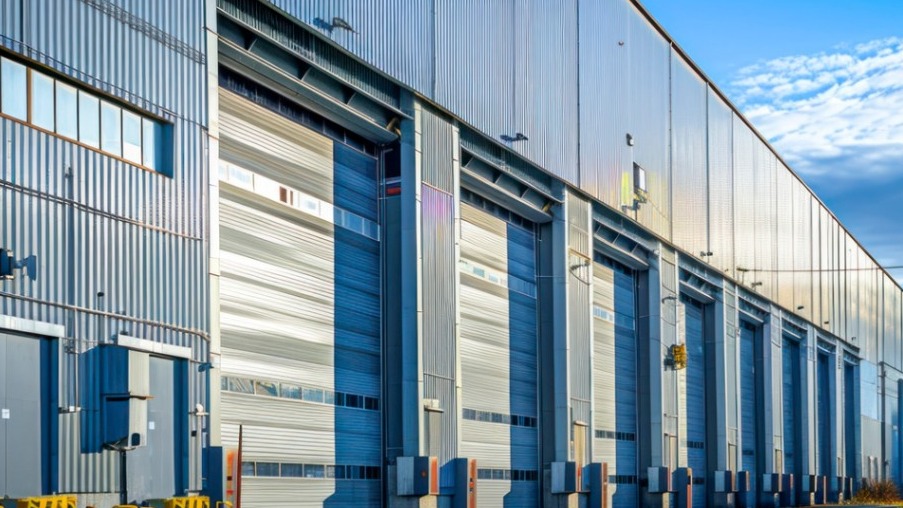
Shadow Warehouse
Definition
A Shadow Warehouse is a short-term, pop-up storage and fulfillment location activated to handle sudden increases in demand. It provides additional capacity near core operations to prevent delays and maintain service levels, typically on temporary contracts with limited services and staffing.
Overview
The shadow warehouse is an urban fulfillment concept that places inventory into compact, high-density, non-customer-facing facilities designed specifically to enable quick-commerce and rapid last-mile delivery. Unlike traditional storefronts or large distribution centers, shadow warehouses are built for speed and throughput: they minimize travel time between stock and customers, prioritize order assembly efficiency, and often operate outside regular retail hours. For beginners, think of a shadow warehouse as a purposely invisible retail backroom deployed near population centers to turn online orders into doorstep deliveries in a matter of minutes or hours.
Why retailers adopt shadow warehouses
Retailers move inventory out of storefronts and big suburban DCs into shadow warehouses primarily to reduce delivery time and increase service density. Customer expectations for same-hour and same-day delivery have risen sharply, and placing inventory closer to clusters of demand reduces vehicle miles, labor travel time, and the unpredictability of traffic or long-distance routing. It also frees storefronts to focus on experience and merchandising while concentrating fulfillment tasks in facilities optimized for picking, packing, and staging.
Facility architecture and design principles
Shadow warehouses are characterized by efficient use of limited urban space and by layouts that minimize picking steps and handoffs. Typical architectural and systems elements include:
- High-density shelving and vertical storage to maximize cubic utilization where footprint is constrained.
- Modular racking and mezzanine levels that allow rapid reconfiguration as SKU mixes change.
- Goods-to-person systems or conveyance to reduce picker travel in very compact sites.
- Dedicated packing and staging zones sized for peak order surges, including thermal packing for perishable goods.
- Multiple small receiving bays or timed inbound windows to avoid congestion on narrow urban streets.
- Security, access control, and discreet facades to keep facilities non-customer facing and comply with local zoning or neighborhood expectations.
- Integration of technology such as a light WMS or micro-fulfillment software, handheld scanners, and direct connectivity to last-mile carriers and marketplace platforms.
Location strategy
Choosing a site for a shadow warehouse balances proximity to customers against real estate and operating costs. Key location factors include:
- Demand density: prioritize neighborhoods with high order frequency and predictable SKU demand.
- Zoning and permits: urban locations may have restrictions on hours, loading activity, or use type; early engagement with local authorities avoids operational delays.
- Access to transportation arteries: even micro-hubs need easy egress for delivery vehicles and access for restocking suppliers.
- Labor availability and shift flexibility: urban labor pools can support extended operating windows required for quick-commerce.
- Real estate cost versus service level: closer sites reduce last-mile expense but typically command higher rent; model trade-offs using delivery cost per order and customer lifetime value.
- Adaptability of space: consider non-traditional sites such as converted retail, basements, parking structures, or shared multi-tenant industrial facilities to lower CAPEX.
Operational model and integration
Shadow warehouses typically integrate tightly with inventory management and last-mile operations. Common operational approaches include micro-fulfillment centers that hold a curated SKU assortment geared to local preferences, dark stores operated by grocers and retailers for rapid order pick-up and delivery, and multi-node networks where shadow warehouses feed local neighborhoods while larger DCs handle bulk replenishment. Inventory allocation often uses dynamic demand forecasting and rule-based replenishment to keep the right SKU mix in each micro-hub.
Technology and systems
Because footprint and staff are constrained, lightweight but capable tech is essential. A simplified WMS for slotting, wave or batch picking, and TTL (time-to-live) tracking is typical. APIs for real-time order routing to the nearest hub, carrier integrations for scheduling delivery, and analytics to monitor order lead times are core capabilities. For higher-volume sites, automation such as vertical lift modules, conveyors, or goods-to-person robotics can improve throughput within tight space envelopes.
Business benefits and trade-offs
Benefits include dramatically reduced delivery times, improved customer satisfaction, better urban coverage, and the ability to offer narrower delivery windows or lower shipping fees. However, trade-offs include higher per-square-foot operating costs, more complex inventory fragmentation across many nodes, and increased management overhead for returns and replenishment logistics. Successful operations strike a balance between inventory allocation, SKU velocity, and the economics of faster delivery.
Best practices for implementation
- Start with demand analytics: pilot shadow warehouses where order density is proven and SKU demand is predictable.
- Curate assortments: limit SKUs to the fast-moving items that drive local order volume to reduce picking complexity.
- Design for modularity: use modular racking and portable fixtures so spaces can be reconfigured quickly as demand shifts.
- Automate selectively: apply automation only where throughput justifies the capital and maintenance costs.
- Integrate last-mile partners early: align packing and staging workflows with carrier pickup processes and delivery routing constraints.
- Monitor returns: set clear processes for handling returns from shadow warehouses to avoid inventory reconciliation issues with larger DCs.
Common mistakes to avoid
- Overextending too quickly: deploying many micro-hubs before demand matures can fragment inventory and reduce fill rates.
- Poor site selection: ignoring delivery access or local permitting leads to operational disruptions and fines.
- Under-investing in software: inadequate inventory visibility between nodes causes stockouts and lost sales.
- Neglecting workforce planning: understaffed or poorly trained teams produce slow pick times and errors in a high-velocity environment.
- Failing to reconcile returns and quality control: returns flow can overwhelm small sites without clear protocols back to main DCs.
Real-world context and trends
Shadow warehouses have grown alongside the rise of dark stores and micro-fulfillment solutions, accelerated by consumer demand for instant delivery and by events that pushed e-commerce adoption. Retailers and pure-play quick-commerce companies use these hubs to offer 30-to-60-minute delivery windows in dense metropolitan areas. The next phase includes greater automation, shared multi-tenant micro-hubs, and more sophisticated demand prediction to further reduce inventory duplication while preserving speed.
Conclusion
For retailers weighing a shadow warehouse strategy, the core question is not simply whether speed can be achieved, but whether faster fulfillment sustainably enhances customer value relative to the incremental rent, labor, and system complexity. When designed with appropriate site selection, simplified assortments, and integrated technology, shadow warehouses are an effective backbone for modern quick-commerce and urban fulfillment models.
Sources And Additional Reading (3)
- The Future of the Last-Mile Ecosystem
“The Future of the Last-Mile Ecosystem.” World Economic Forum, https://www.weforum.org/publications/the-future-of-the-last-mile-ecosystem/.
- Same-Day Delivery
“Same-Day Delivery.” Shopify, https://www.shopify.com/retail/same-day-delivery.
- Logistics Real Estate Insights
“Logistics Real Estate Insights.” Prologis, https://www.prologis.com/insights.
More from this term
Looking for a 3PL?
Compare warehouses on Racklify and find the right logistics partner for your business.