
Why Every Fulfillment Center Needs a High-Quality Tape Dispenser
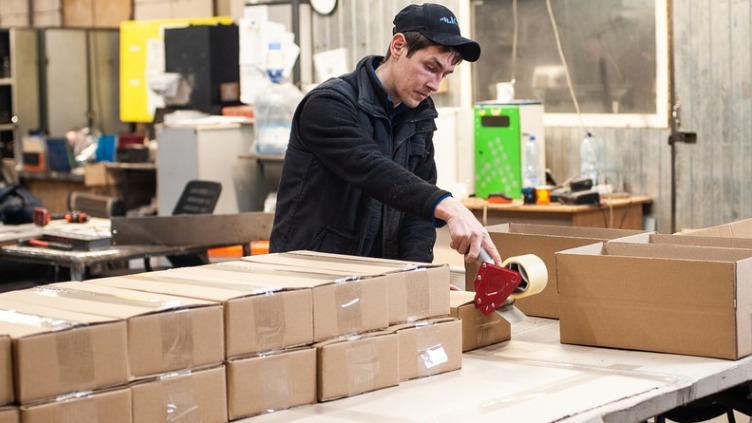
Tape Dispenser
Definition
A manual or electric device that dispenses tape for carton sealing, bundling, or packing tasks.
Overview
In a fulfillment center where speed, accuracy, and repeatable processes matter, a tape dispenser is much more than a simple office tool — it is a frontline piece of packaging equipment. A high-quality tape dispenser reliably presents tape, cuts it cleanly, and reduces the physical effort required from packers. For teams packing dozens or thousands of boxes per shift, the right dispenser contributes directly to throughput, ergonomics, and package security.
What is a high-quality tape dispenser?
At its core, a tape dispenser holds a roll of packaging tape and presents a ready-to-use length for sealing boxes. High-quality dispensers go further: they offer consistent cutting, adjustable tension, robust construction for heavy use, and safety features that protect users. They come in manual, spring-action, countertop, bench, and automated/semiautomated models designed specifically for high-volume fulfillment environments.
Why it matters in fulfillment centers
- Speed and throughput: Small time savings per package multiply quickly. A fast dispenser that reliably yields the correct tape length allows packers to seal boxes faster without fumbling to find tape ends or making re-cuts. In busy shifts, this reduces cycle time and increases orders-per-hour.
- Consistency and package integrity: Consistent tape application ensures seals are uniform across cartons. That reduces rework from poorly sealed packages, lowers return rates from damaged goods, and supports predictable performance for downstream carriers.
- Ergonomics and safety: High-quality dispensers minimize repetitive wrist movement and gripping force. Ergonomic designs and controlled tension decrease fatigue and the risk of repetitive strain injuries. Safety features such as guarded blades lower cut injuries that can occur with improvised cutters.
- Cost control and waste reduction: Accurate tape dispensing reduces overuse of tape and eliminates wasted or damaged tape rolls. Replacing a cheap, frequently failing dispenser with a durable model often lowers per-package tape cost and downtime for maintenance or replacement.
- Scalability and process standardization: When expansion or seasonal peaks occur, standardized dispensers make it easier to onboard temporary staff, maintain consistent output quality, and plan workspace layouts.
Types of dispensers and when to use them
- Handheld/manual dispensers: Lightweight and portable, suitable for lower-volume packing or in areas where mobility is needed. Best for intermittent use but can cause fatigue if used continuously.
- Countertop/bench dispensers: Stable units mounted on packing tables that provide quick one-handed operation. Ideal for medium to high-volume stations where packers remain at a fixed position.
- Adjustable tension dispensers: Allow packers to set tape pull force to match tape type and application, reducing tearing or stretching on delicate boxes.
- Heavy-duty/industrial dispensers: Built for continuous use in high-volume fulfillment centers; they handle large core diameters and thicker tapes with durable components.
- Semi-automatic and automatic dispensers: These units measure and dispense pre-set tape lengths, often used for high-speed lines where consistent tape length and minimal operator handling are required. They integrate well with conveyor lines and automated packing cells.
- Water-activated tape (WAT) dispensers: Used with gummed paper tape; these machines wet, cut, and present pre-measured lengths. WAT provides tamper-evident seals and is favored for high-value shipments and sustainability-focused operations.
Best practices for implementation
- Match dispenser to workload and tape type: Assess daily pack volumes and tape types (e.g., polypropylene pressure-sensitive tape, reinforced filament tape, or water-activated tape). Choose a model rated for that throughput and compatible with the tape core size and width you use.
- Standardize across stations: Use the same or compatible dispensers at all packing stations to reduce training time and simplify spare-parts inventory.
- Optimize placement and ergonomics: Mount dispensers at comfortable heights and within easy reach of packing materials. Consider wrist-friendly orientations and ensure packers can operate them with minimal bending or twisting.
- Train operators: Provide short, practical training on loading rolls, adjusting tension, using safety features, and recognizing wear signs. Emphasize quick troubleshooting steps to avoid downtime.
- Plan for maintenance: Establish a simple maintenance schedule for cleaning, blade checks, and lubrication where applicable. Keep replacement blades and spare parts on hand to avoid production interruptions.
- Measure impact: Track basic KPIs such as average pack time, tape usage per carton, and seal failure rates before and after dispenser upgrades to quantify ROI.
Common implementation mistakes to avoid
- Buying by price alone: Extremely cheap dispensers may save money upfront but often fail quickly in a fulfillment environment, increasing downtime and replacement costs.
- Ignoring tape compatibility: Not all dispensers work well with every tape type or width; mismatches cause jams, poor cuts, or wasted tape.
- Poor placement in the packing workflow: If dispensers are awkwardly located, packers will develop inefficient motions, slowing the process and increasing injury risk.
- Neglecting maintenance and blade replacement: Dull blades and dirty rollers lead to inconsistent cuts and tape sticking, which increases waste and slows operators.
- Overlooking ergonomics: Repetitive strain from poor tool selection or placement causes absenteeism and lowers productivity over time.
Estimating ROI — a simple approach
Calculate the value of a high-quality dispenser by estimating time savings, tape waste reduction, and reduced rework. For example:
- Assume each packer seals 300 packages per day. If a better dispenser saves 2 seconds per package, that is 600 seconds (10 minutes) saved per packer per day.
- Multiply by hourly labor rates to estimate labor savings. For a $15/hour labor rate, 10 minutes/day equals $2.50/day or roughly $625/year per packer (250 working days).
- Add tape savings: if better dispensing reduces tape use by 0.1 inch per box, multiplied over thousands of boxes, the material savings compound quickly.
Even modest time and material savings justify durable dispensers in most medium-to-high-volume facilities.
Sustainability and tape choices
High-quality dispensers can support sustainability goals by enabling the use of alternative tapes such as recyclable paper tape or reducing excess plastic tape use through precise dispensing. Water-activated tape, paired with an appropriate dispenser, offers a strong, tamper-evident seal and is often recyclable along with corrugated cartons.
Real-world example
An e-commerce fulfillment center processing 5,000 orders/day replaced handheld cheap dispensers with ergonomic bench dispensers and a few semi-automatic machines on high-speed lines. The operation saw a 7–10% increase in packing throughput, a measurable drop in wrist injuries reported, and a 12% reduction in tape usage per carton due to consistent, optimized tape lengths — yielding a full payback on equipment within months.
Conclusion
A high-quality tape dispenser is a small capital investment with outsized operational benefits in a fulfillment center: faster packing, better package integrity, reduced waste, improved ergonomics, and lower total cost of ownership. Selecting the right dispenser for your workload, integrating it thoughtfully into the packing station, and maintaining it properly will deliver consistent returns in both productivity and worker satisfaction.
More from this term
Looking for a 3PL?
Compare warehouses on Racklify and find the right logistics partner for your business.